Free tool
Biological Age Calculator
At a glance
Key takeaways
- Biological age estimates how old your body seems, not how many birthdays you've had.
- Smoking, activity, diet, sleep, alcohol and body composition have the strongest links to longevity.
- This calculator is an educational estimate — clinical tests use DNA methylation or blood biomarkers.
- Your top recommendations target the habits with the biggest potential impact first.
How it works
How to estimate your biological age
- 1
Enter your basics
Add your age, sex, height and weight. Height and weight are used to calculate BMI.
- 2
Describe your habits
Choose the options that best match your exercise, sleep, alcohol, smoking and stress.
- 3
Add nutrition and recovery
Tell us about your water intake, diet quality and recovery routine.
- 4
Unlock your results
Enter your name and email to see your estimated biological age, wellness, recovery and longevity scores and personalized recommendations.
The calculator starts with your chronological age, then adds or subtracts years for each habit based on the size of its association with longevity in large studies — smoking and physical activity carry the most weight, hydration the least. Adjustments are capped so no single answer dominates. Read the full approach in our research methodology.
The science
What affects biological age the most?
| Factor | Evidence | Why it matters |
|---|---|---|
| Smoking | Strong | Large cohort studies link smoking with roughly a decade of lost life expectancy, and quitting — especially before 40 — recovers most of it. |
| Exercise | Strong | Cardiorespiratory fitness and daily activity are consistently associated with lower all-cause mortality in large cohorts. |
| Diet quality | Strong | Global Burden of Disease analyses rank poor diet among the leading modifiable contributors to death and disability. |
| Sleep | Strong | Both short and very long habitual sleep are associated with higher mortality risk; 7–9 hours is the consensus recommendation for adults. |
| Alcohol | Strong | A pooled analysis of nearly 600,000 drinkers found risk rising with intake above roughly 100 g of alcohol a week (about 7 U.S. drinks). |
| Body composition | Strong | Meta-analyses of millions of adults link both underweight and obesity with higher mortality, with the lowest risk around a BMI of 20–25. |
| Stress | Moderate | Chronic psychological stress is associated with inflammation, poorer sleep and higher cardiometabolic risk. |
| Recovery habits | Moderate | Adequate rest, sleep and load management support training adaptation and reduce overuse injury risk. |
| Hydration | Moderate | Even mild dehydration can affect mood, attention and physical performance; needs vary with climate and activity. |
The bottom line
Biological age reflects how your body is aging, and lifestyle is a major lever. This calculator estimates it from 12 research-backed factors and shows which habits to prioritize. For a lab-based measure, look at epigenetic or blood-biomarker tests — and discuss results with a clinician.
FAQ
Biological age calculator FAQs
What is biological age?
How accurate is this biological age calculator?
How is biological age measured clinically?
Can you lower your biological age?
Which factors affect biological age the most?
Is my information private?
Why do you ask for my name and email?
Learn more about biological age
Citations
Sources & references
- [1]Impact of healthy lifestyle factors on life expectancies in the US populationLi Y, Pan A, Wang DD, et al.. Circulation, 2018 · Cohort studyView source : Impact of healthy lifestyle factors on life expectancies in the US population (opens in a new tab)
- [2]21st-century hazards of smoking and benefits of cessation in the United StatesJha P, Ramasundarahettige C, Landsman V, et al.. New England Journal of Medicine, 2013 · Cohort studyView source : 21st-century hazards of smoking and benefits of cessation in the United States (opens in a new tab)
- [3]Risk thresholds for alcohol consumption: combined analysis of individual-participant data for 599 912 current drinkers in 83 prospective studiesWood AM, Kaptoge S, Butterworth AS, et al.. The Lancet, 2018 · Meta-analysisView source : Risk thresholds for alcohol consumption: combined analysis of individual-participant data for 599 912 current drinkers in 83 prospective studies (opens in a new tab)
- [4]Body-mass index and all-cause mortality: individual-participant-data meta-analysis of 239 prospective studies in four continentsGlobal BMI Mortality Collaboration. The Lancet, 2016 · Meta-analysisView source : Body-mass index and all-cause mortality: individual-participant-data meta-analysis of 239 prospective studies in four continents (opens in a new tab)
- [5]Sleep duration and all-cause mortality: a systematic review and meta-analysis of prospective studiesCappuccio FP, D'Elia L, Strazzullo P, Miller MA. Sleep, 2010 · Meta-analysisView source : Sleep duration and all-cause mortality: a systematic review and meta-analysis of prospective studies (opens in a new tab)
- [6]Daily steps and all-cause mortality: a meta-analysis of 15 international cohortsPaluch AE, Bajpai S, Bassett DR, et al.. The Lancet Public Health, 2022 · Meta-analysisView source : Daily steps and all-cause mortality: a meta-analysis of 15 international cohorts (opens in a new tab)
- [7]Health effects of dietary risks in 195 countries, 1990-2017: a systematic analysis for the Global Burden of Disease Study 2017GBD 2017 Diet Collaborators. The Lancet, 2019 · Systematic reviewView source : Health effects of dietary risks in 195 countries, 1990-2017: a systematic analysis for the Global Burden of Disease Study 2017 (opens in a new tab)
- [8]An epigenetic biomarker of aging for lifespan and healthspanLevine ME, Lu AT, Quach A, et al.. Aging (Albany NY), 2018 · Cohort studyView source : An epigenetic biomarker of aging for lifespan and healthspan (opens in a new tab)
Study links open a PubMed search for the exact title, so they keep working even if a journal changes its URL.
Our partner store
Shop 10X Health
Genetic testing, the 10X Health System and daily supplements — straight from the official 10X Health store. Save 10% through our links.
- Save 10%
 New · Weight & metabolism10X Health Metabolism Genetic Test Shop now (opens 10X Health in a new tab; affiliate link)
- Save 10%
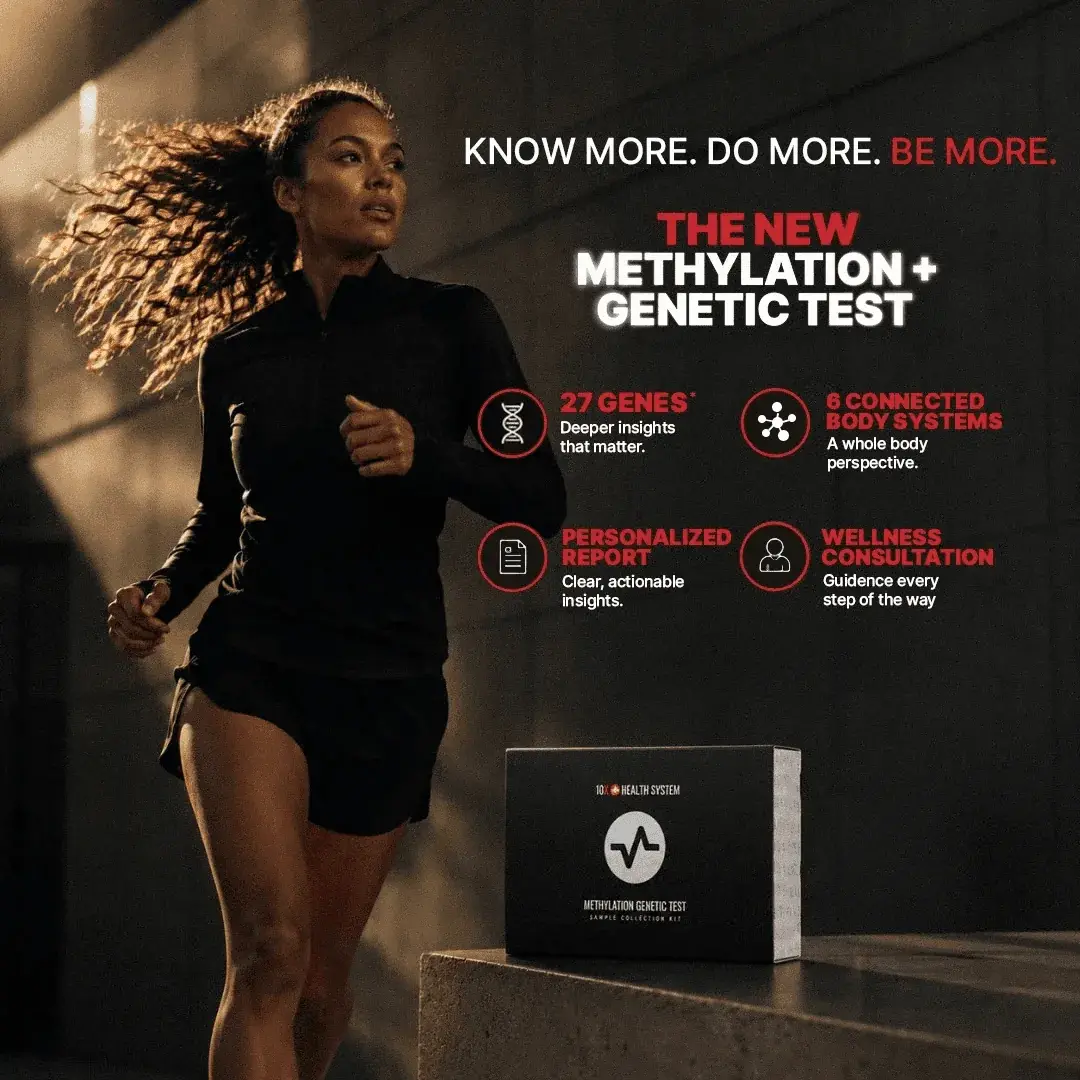 Wellness genetics10X Health Methylation + Genetic Test Shop now (opens 10X Health in a new tab; affiliate link)
- Save 10%
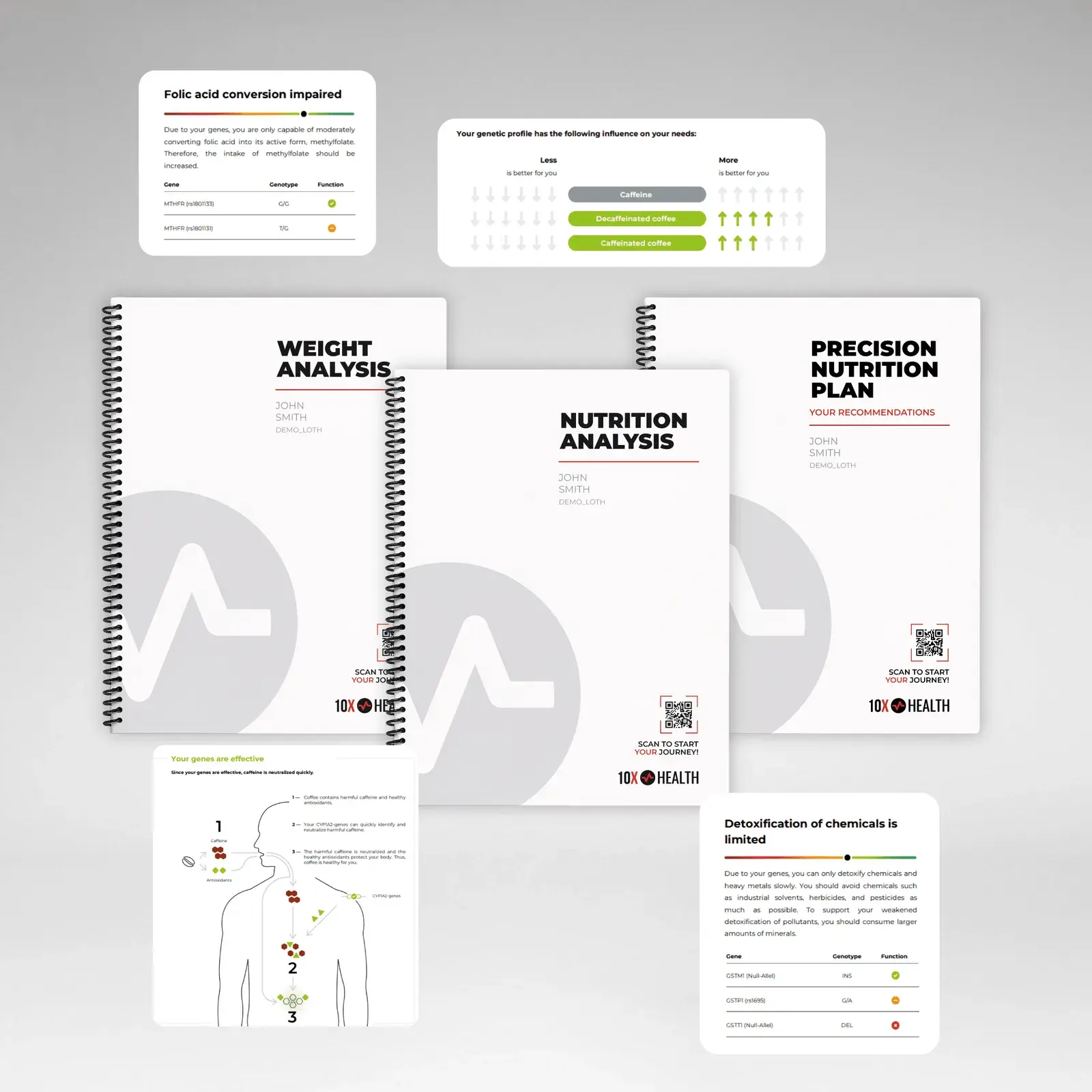 Personalized approachThe 10X Health System Shop now (opens 10X Health in a new tab; affiliate link)
- Save 10%
 Daily foundations10X Health Foundations Shop now (opens 10X Health in a new tab; affiliate link)
Affiliate disclosure: Live10X is an independent educational site. If you purchase through our 10X Health links, we may earn a commission at no extra cost to you. It never changes what we write. Read our affiliate disclosure.
See everything we coverThese statements have not been evaluated by the Food and Drug Administration. These products are not intended to diagnose, treat, cure, or prevent any disease.
Stop guessing. Start with data — and a plan.
Take the free wellness assessment to find your highest-leverage focus areas, then explore genetic testing when you're ready to personalize further.
“Shop 10X Health” is an affiliate link — we may earn a commission at no extra cost to you. Affiliate disclosure