Skip to content

Save 10% at 10X Health: tests & supplements

Shop now (opens 10X Health in a new tab; affiliate link)
Live10X

Longevity · Pillar guide

Healthy Aging: A Practical Guide to Staying Strong, Sharp and Independent

Aging is inevitable. Frailty isn't. Most of what people fear about getting older — losing strength, balance, memory or independence — is influenced by choices that start decades earlier and continue to pay off at any age.
By Reviewed Updated 3 min read Educational · not medical advice

Quick answer

What is healthy aging?

Healthy aging means maintaining physical function, cognitive health, independence and wellbeing as you get older. The most effective strategies are strength and balance training, regular aerobic activity, adequate protein, quality sleep, social engagement, hearing and vision care, lifelong learning, and staying current with the preventive screenings your healthcare provider recommends.

This guide covers the body systems that matter most for aging well — muscle, bone, brain, heart, skin and social health — with practical steps for each.

On this page +
  1. What is healthy aging?
  2. Why healthy aging matters
  3. Protect your muscle
  4. Build and keep strong bones
  5. Keep your brain sharp
  6. Heart, skin and metabolic health
  7. Balance and fall prevention
  8. Frequently asked questions
  9. People also ask
  10. Sources & references

Quick facts

Top priority
Strength & balance
Protein (older adults)
Often 1.0–1.2 g/kg/day
Brain health lever
Hearing & BP care
Weekly activity
150+ min + 2–3 strength

Definition

What is healthy aging?

The World Health Organization frames healthy aging as developing and maintaining the functional ability that enables wellbeing in older age. It's less about the absence of disease and more about being able to do what you value — move, think, connect and contribute.

Healthy aging is a lifelong process. Muscle, bone and cardiovascular reserves built in your 30s–50s become the buffer you draw on in your 60s–80s.
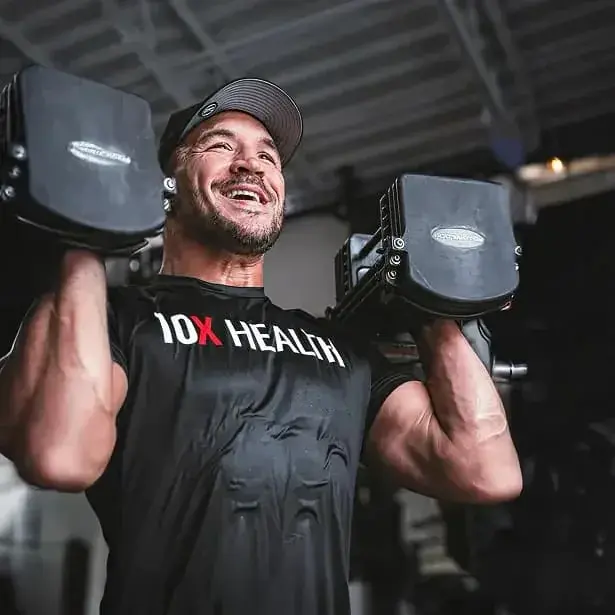
Man lifting dumbbells overhead in a gym wearing a 10X Health shirt
Progressive strength training is one of the most effective healthy-aging tools at any age.

Why it matters

Why healthy aging matters

Muscle mass and strength tend to decline gradually from midlife, and the rate often accelerates after 60. Low muscle strength is associated with falls, loss of independence and higher mortality — but it's also highly responsive to training at any age.

Brain health is similarly modifiable. International expert reviews estimate that a substantial share of dementia cases worldwide may be linked to modifiable risk factors, including physical inactivity, hearing loss, high blood pressure, smoking, social isolation and diabetes.

At a glance

Key takeaways

  • Healthy aging is about function and independence, not just avoiding disease.
  • Strength training is one of the most powerful tools to preserve muscle, bone and metabolic health.
  • Many older adults benefit from more protein than the minimum RDA — discuss targets with your clinician.
  • Hearing, blood pressure, activity and social connection are key modifiable factors for brain health.
  • Balance training and home safety meaningfully reduce fall risk.

Protect your muscle

Sarcopenia — age-related loss of muscle mass and function — is a major driver of frailty. Resistance training two to three times per week, progressive over time, is the most effective countermeasure. Expert groups on protein for older adults have suggested around 1.0–1.2 g of protein per kg of body weight per day for healthy older adults, spread across meals.

  • Train all major muscle groups 2–3× per week.
  • Prioritize legs and hips — they power walking, stairs and getting up.
  • Include 25–40 g of protein per meal where appropriate.
  • Consider creatine only after discussing it with your clinician; it's among the most studied sports supplements.

Build and keep strong bones

  • Weight-bearing and impact activities (walking, stairs, jumping if appropriate) stimulate bone.
  • Resistance training supports bone density.
  • Meet calcium and vitamin D needs, ideally from diet plus testing-guided supplementation.
  • Ask your clinician about bone density screening at the recommended age.

Keep your brain sharp

  • Stay physically active — exercise supports blood flow and brain health.
  • Get hearing checked and use hearing aids if recommended.
  • Manage blood pressure, blood sugar and cholesterol with your clinician.
  • Keep learning — new skills, languages, instruments.
  • Stay socially engaged and protect sleep.

Get the Live10X Briefing

One evidence-informed longevity insight a week.

No spam, ever. Unsubscribe anytime. See our privacy policy.

Heart, skin and metabolic health

Cardiovascular fitness supports every organ. Aim for regular moderate activity plus some vigorous efforts. For skin, daily sun protection, not smoking, adequate protein and vitamin C support collagen, which naturally declines with age. Keep an eye on metabolic markers — glucose, lipids, waist circumference — with routine labs.

Balance and fall prevention

  • Practice balance daily: single-leg stands, heel-to-toe walking, tai chi.
  • Keep floors clear and lighting bright; add grab bars where helpful.
  • Review medications that may cause dizziness with your clinician or pharmacist.
  • Check vision regularly.

The bottom line

Healthy aging is built on strength, balance, cardiovascular fitness, sufficient protein, sleep, social connection and proactive care for hearing, vision and blood pressure. Start where you are — the body responds to training at every age. For a structured plan, download the Longevity Starter Guide.

FAQ

Frequently asked questions

Is it too late to start strength training at 60 or 70?

No. Studies show older adults — including people in their 80s and 90s — can gain strength and muscle with supervised, progressive resistance training. Start conservatively and consider working with a qualified trainer.

How much protein do older adults need?

The RDA is 0.8 g/kg/day, but expert groups have suggested around 1.0–1.2 g/kg/day for healthy older adults, and more for some situations. People with kidney disease should follow their clinician's guidance.

What's the best exercise for healthy aging?

A combination: strength training, aerobic activity, balance work and flexibility. The best program is one you'll do consistently.

Do collagen supplements help aging skin?

Some trials suggest collagen peptides may modestly improve skin elasticity and hydration, but results vary. Sun protection and not smoking have stronger evidence.

People also ask

More questions people ask

What are the signs of aging well?

Good mobility and strength, stable balance, sharp thinking, restful sleep, healthy blood pressure and metabolic markers, and active social engagement.

Can you prevent age-related muscle loss?

You can significantly slow it with resistance training and adequate protein, and regain strength at any age.

Does hearing loss affect memory?

Hearing loss is considered a modifiable risk factor for cognitive decline in major expert reviews. Addressing it with hearing aids when appropriate is recommended.

Answers

Key terms

Citations

Sources & references

  1. [1]The Physical Activity Guidelines for AmericansPiercy KL, Troiano RP, Ballard RM, et al.. JAMA, 2018 · Practice guidelineView source : The Physical Activity Guidelines for Americans (opens in a new tab)
  2. [2]Vitamin D: Fact Sheet for Health ProfessionalsNIH Office of Dietary Supplements · Government resourceView source : Vitamin D: Fact Sheet for Health Professionals (opens in a new tab)
  3. [3]Vitamin B12: Fact Sheet for Health ProfessionalsNIH Office of Dietary Supplements · Government resourceView source : Vitamin B12: Fact Sheet for Health Professionals (opens in a new tab)
  4. [4]Evidence-based recommendations for optimal dietary protein intake in older people: a position paper from the PROT-AGE Study GroupBauer J, Biolo G, Cederholm T, et al.. Journal of the American Medical Directors Association, 2013 · Consensus statementView source : Evidence-based recommendations for optimal dietary protein intake in older people: a position paper from the PROT-AGE Study Group (opens in a new tab)

Study links open a PubMed search for the exact title, so they keep working even if a journal changes its URL.

Related topics

Longevity · GuidePreventative Wellness: A Proactive Plan for Long-Term HealthPreventative wellness shifts health from reactive to proactive. Learn the levels of prevention, biomarkers to discuss with your clinician, and a simple yearly prevention calendar.Performance · GuideHormone Health: Lifestyle Foundations for Balanced HormonesAn educational guide to hormone health: cortisol, insulin, thyroid, testosterone and estrogen, the lifestyle levers that influence them, life stages and what to ask your clinician.Longevity · GuideLongevity Habits: 12 Daily Practices Linked to a Longer HealthspanThe daily longevity habits with the strongest evidence — movement, strength, sleep, diet quality, connection and more — plus a sample longevity day and how to make habits stick.Longevity · HubLongevity: The Science of Living Longer, Stronger and BetterA science-informed guide to longevity: healthspan vs. lifespan, the hallmarks of aging, biological age, the habits with the strongest evidence, and which trends are still unproven.Longevity · GuideBiological Age: What It Is, How It's Measured and How to Improve ItWhat is biological age? Learn how epigenetic clocks and blood-based tests estimate it, how accurate they are, and the habits associated with slower biological aging.Longevity · GuideCellular Health: Mitochondria, NAD+, Autophagy and Aging CellsWhat is cellular health? A clear guide to mitochondria, NAD+, autophagy, oxidative stress and senescent cells — and the evidence-based ways to support healthy cells as you age.

From the blog

Man performing an overhead dumbbell press in a gym
Longevity & Healthy Aging 3 min read

12 Daily Habits Linked to Healthier Biological Aging

The everyday habits most linked with slower biological aging — strength, sleep, plant diversity, connection — and how to fit them into real life.

10X Health Gut Health test kit pouch
Gut Health & Nutrition 2 min read

Gut Microbiome Basics: Why Fiber Diversity Matters

What the gut microbiome is, why fiber diversity beats any superfood, what fermented-food research shows and easy ways to eat 30 plants a week.

Sample personalized wellness report booklets
5 sections · 30 checkpoints

Free printable guide

The Longevity Starter Guide

A printable, one-sitting framework covering the five pillars most consistently linked with healthy aging: sleep, movement, nutrition, stress and personalized testing.

No spam, ever. Unsubscribe anytime. See our privacy policy.

Our partner store

Shop 10X Health

Genetic testing, the 10X Health System and daily supplements — straight from the official 10X Health store. Save 10% through our links.

Shop the store (opens 10X Health in a new tab; affiliate link)

Affiliate disclosure: Live10X is an independent educational site. If you purchase through our 10X Health links, we may earn a commission at no extra cost to you. It never changes what we write. Read our affiliate disclosure.

See everything we cover

These statements have not been evaluated by the Food and Drug Administration. These products are not intended to diagnose, treat, cure, or prevent any disease.

Stop guessing. Start with data — and a plan.

Take the free wellness assessment to find your highest-leverage focus areas, then explore genetic testing when you're ready to personalize further.

“Shop 10X Health” is an affiliate link — we may earn a commission at no extra cost to you. Affiliate disclosure

Free AssessmentShop · Save 10% (opens 10X Health in a new tab; affiliate link)


