This hub explains how consumer wellness genetic tests work, what they can and can't tell you, where methylation and MTHFR fit in, and how to turn a report into sensible next steps — ideally with a qualified professional in the loop. Start here, then go deeper into any cluster below.
On this page +
- What is wellness genetic testing?
- Why genetic insight matters for everyday health
- How wellness genetic tests work
- What a methylation-focused genetic test can show
- What genetic testing can't tell you
- How to choose a wellness genetic test
- Turning results into action
- Evidence snapshot
- Frequently asked questions
- People also ask
- Sources & references
Quick facts
- Typical sample
- Cheek swab or saliva
- How often
- Once — DNA doesn't change
- Common focus
- Methylation, nutrients, caffeine
- Diagnostic?
- No — educational
Definition
What is wellness genetic testing?
Your genome contains roughly three billion DNA base pairs. Any two people share about 99.9% of that sequence; the remaining differences include millions of single-nucleotide polymorphisms (SNPs) — single-letter spelling variations. Some SNPs sit inside genes that make enzymes, receptors or transport proteins, and can nudge how efficiently those proteins work.
A wellness genetic test reads a curated panel of these SNPs and translates them into practical categories — for example, how efficiently you may activate folate, clear caffeine or respond to certain training styles. That makes it different from diagnostic genetic tests, which clinicians order to confirm or rule out disease, and from ancestry tests, which focus on where your ancestors came from. (See our ancestry vs. wellness DNA comparison.)

Why it matters
Why genetic insight matters for everyday health
Generic health advice is written for an average person who doesn't exist. Two people can eat the same diet or drink the same coffee and respond differently, partly because of genetic variation in enzymes like MTHFR (folate activation) or CYP1A2 (caffeine metabolism). Knowing your tendencies helps you prioritize the changes most likely to matter for you.
Your DNA sequence doesn't change, so a single test becomes a lifelong reference you can revisit as research evolves. Just as important, genetic insight can be motivating: many people find it easier to stick with a habit when they understand why it's relevant to their own biology.
At a glance
Key takeaways
- Wellness genetic tests look at common variants (SNPs) tied to traits such as methylation, nutrient needs and caffeine metabolism.
- They are educational tools — not diagnostic tests — and cannot tell you whether you have or will develop a disease.
- Your genotype never changes, so one test gives you a lifelong reference you can revisit.
- Genes load the dice; nutrition, sleep, movement and environment largely decide how they play out.
- The most useful approach pairs genetic insight with blood work and a professional who can interpret both.
How wellness genetic tests work
Most consumer wellness tests use genotyping — reading specific, pre-selected positions in your DNA — rather than sequencing your entire genome. Genotyping is fast, affordable and highly accurate for common variants at reputable labs. The science and judgment live in which variants are chosen and how results are interpreted.
- Collect: you provide a cheek swab or saliva sample at home and mail it back.
- Genotype: a laboratory extracts DNA and reads the selected variants.
- Interpret: each genotype is matched against published research on that variant.
- Report: results are translated into practical categories and suggestions.
- Review: the best providers include a consultation to put results in context.
What a methylation-focused genetic test can show
Methylation-focused panels typically include genes involved in the folate and B12 cycle (such as MTHFR, MTR and MTRR), neurotransmitter and estrogen metabolism (COMT), detoxification enzymes (GSTM1, GSTP1, GSTT1), and nutrient-related genes that influence vitamin D, B12 or vitamin A status. Some also include caffeine metabolism (CYP1A2) and fitness-related variants.
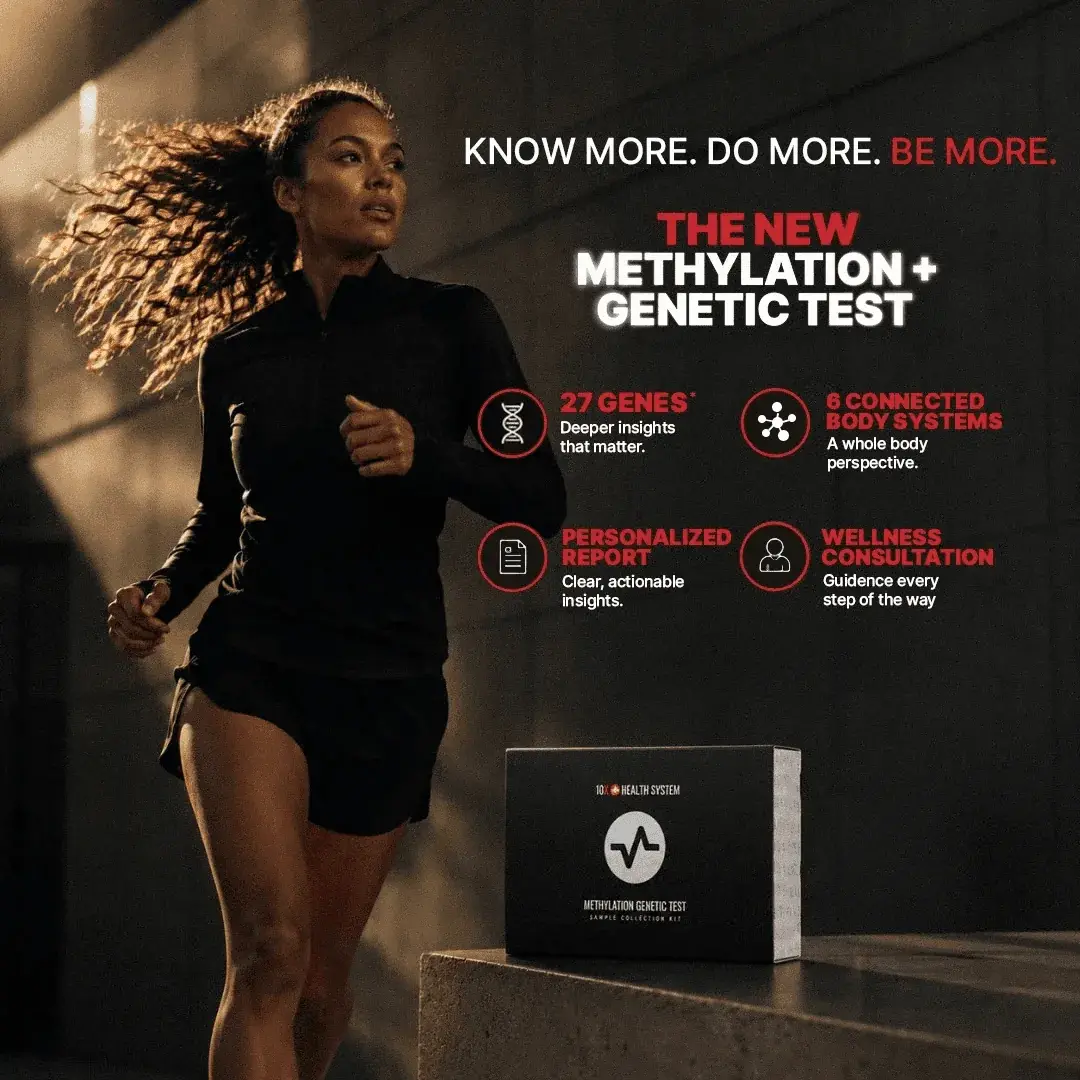
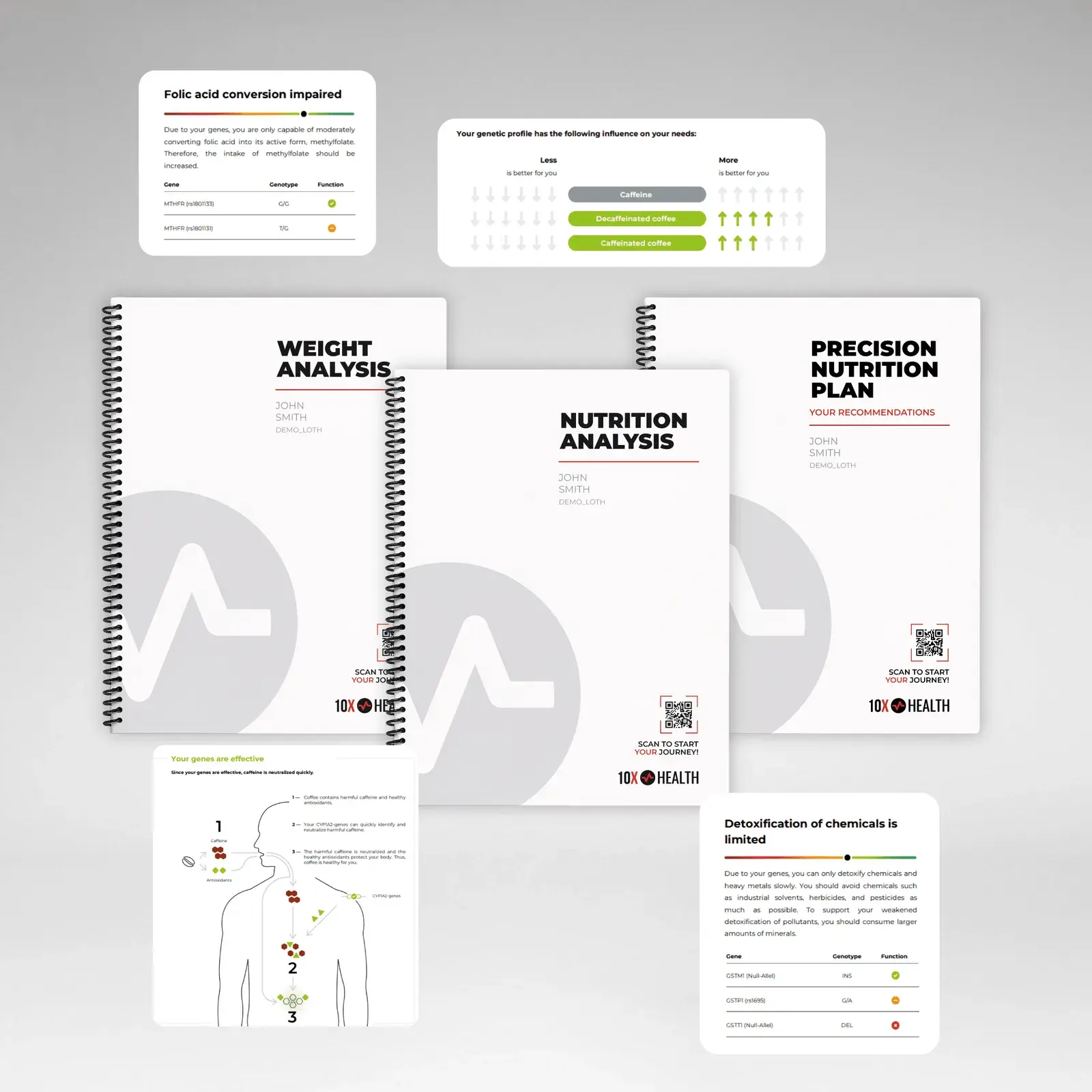
For example, the 10X Health Methylation + Genetic Test (opens 10X Health in a new tab; affiliate link) says it reviews 27 genes across 6 connected body systems and includes a personalized report plus a wellness consultation. Whatever provider you choose, look for a clear list of genes, the reasoning behind each, and practical next steps rather than scary labels.
What genetic testing can't tell you
Understanding the limits is what separates useful genetic insight from anxiety. A wellness panel is a narrow, probabilistic lens — not a crystal ball.
- It does not diagnose disease or tell you whether you will develop a condition.
- Most traits are polygenic — shaped by hundreds of variants plus environment — so single SNPs usually have small effects.
- It does not show your current status: a folate-gene result doesn't reveal your folate levels today (blood work does).
- It is not a screening test for rare, high-impact mutations such as BRCA1/2; that requires clinical-grade testing and genetic counseling.
- Evidence quality varies by variant — some associations are robust, others are early or inconsistent.
Get the Live10X Briefing
One evidence-informed longevity insight a week.
How to choose a wellness genetic test
Not all tests are created equal. Before you buy, compare providers on transparency, lab quality, privacy and support — not just price.
- A published list of the genes and variants tested, with rationale.
- Testing performed in a certified laboratory (in the U.S., ask whether the lab is CLIA-certified).
- A clear privacy policy: who can access your data, whether it's sold or shared, and how to delete it.
- Actionable, educational language — not disease predictions or fear-based upsells.
- Access to a consultation or expert review to help interpret results.
- Guidance on which blood tests can confirm or add context to genetic findings.
Turning results into action
A good report should leave you with a short, prioritized list — not a 60-page to-do list. Treat findings as hypotheses to test, then measure whether changes help.
- Pick the two or three most actionable findings, such as folate activation or caffeine timing.
- Confirm with blood markers where possible — homocysteine, B12, folate or vitamin D.
- Change one variable at a time for 8–12 weeks so you can tell what worked.
- Avoid megadosing supplements based on genotype alone; discuss forms and doses with a professional.
- Revisit your report yearly as research and your goals evolve.
How 10X Health personalizes
The 10X Health System: data first, then decisions
As described by 10X Health, its approach pairs genetic and blood testing with expert analysis to shape customized recommendations — the same “measure, then personalize” logic we teach across Live10X.
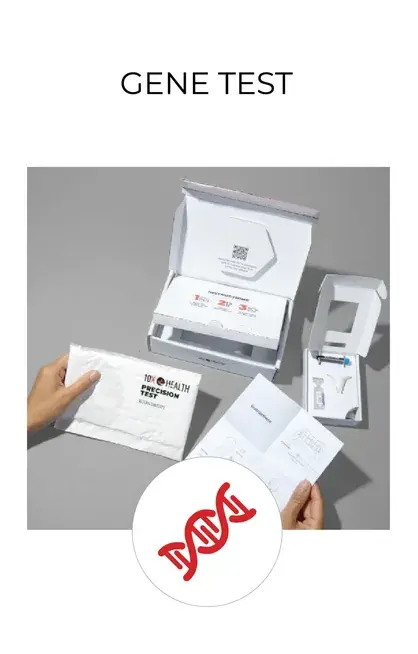
01 · Gene test
02 · Blood test

03 · Expert analysis

04 · Customized solutions
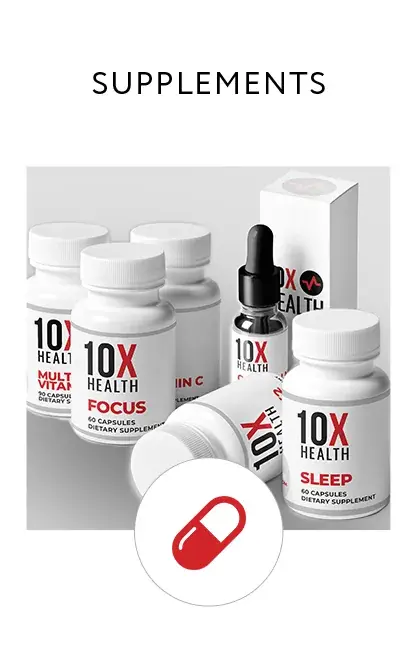
05 · Supplements
Affiliate disclosure: Live10X is an independent educational site. If you purchase through our 10X Health links, we may earn a commission at no extra cost to you. It never changes what we write. Read our affiliate disclosure.
Evidence snapshot
What the research supports — at a glance
Our editorial rating of the current human evidence. Ratings summarize research quality, not personal suitability.
Genotyping accuracy (common SNPs)
StrongReputable labs read common variants with very high accuracy. Interpretation is where uncertainty lives.
MTHFR C677T and homocysteine
StrongThe TT genotype is consistently linked with higher homocysteine, especially when folate intake is low.
CYP1A2 and caffeine clearance
ModerateVariants influence how fast caffeine is metabolized; health implications are still being studied.
Genotype-based diet plans
EmergingPersonalized advice improves diets, but adding genetics hasn't consistently beaten personalization alone.
Fitness genes (e.g., ACTN3)
EmergingAssociations with power vs. endurance exist, but training and effort matter far more.
Sleep & circadian genes
LimitedEarly research links variants to chronotype; practical guidance from genotype alone is limited.
The bottom line
Wellness genetic testing is a powerful personalization tool when you respect its limits. It reveals tendencies — how you may handle folate, caffeine, detoxification or training — not diagnoses. Choose a transparent provider, confirm key findings with blood work, act on a few high-value insights at a time, and review everything with a qualified professional. Ready to explore? Start with our wellness assessment or read how methylation works.
FAQ
Frequently asked questions
Is wellness genetic testing accurate?
How is a wellness DNA test different from an ancestry test?
Do I need a doctor to order a wellness genetic test?
How long do results take?
Is my genetic data protected?
People also ask
More questions people ask
Can a DNA test tell me what diet is best for me?
What genes are in a methylation panel?
Is genetic testing worth it for healthy people?
Can my genetic results change over time?
Answers
Related questions
Key terms
Citations
Sources & references
- [1]MTHFR geneMedlinePlus Genetics, U.S. National Library of Medicine · Reference databaseView source : MTHFR gene (opens in a new tab)
- [2]ACMG Practice Guideline: lack of evidence for MTHFR polymorphism testingHickey SE, Curry CJ, Toriello HV. Genetics in Medicine, 2013 · Practice guidelineView source : ACMG Practice Guideline: lack of evidence for MTHFR polymorphism testing (opens in a new tab)
- [3]Effect of personalized nutrition on health-related behaviour change: evidence from the Food4Me European randomized controlled trialCelis-Morales C, Livingstone KM, Marsaux CF, et al.. International Journal of Epidemiology, 2017 · Randomized trialView source : Effect of personalized nutrition on health-related behaviour change: evidence from the Food4Me European randomized controlled trial (opens in a new tab)
Study links open a PubMed search for the exact title, so they keep working even if a journal changes its URL.