Skip to content

Save 10% at 10X Health: tests & supplements

Shop now (opens 10X Health in a new tab; affiliate link)
Live10X

Longevity · Cluster guide

Biological Age: What It Is, How It's Measured and How to Improve It

Two 50-year-olds can have very different bodies. One runs half-marathons and sleeps soundly; the other struggles with stairs and energy. Their birthdays match, but their biology doesn't. That difference is what biological age tries to capture.
By Reviewed Updated 4 min read Educational · not medical advice

Quick answer

What is biological age?

Biological age is an estimate of how old your body seems based on biomarkers — such as DNA methylation patterns, blood chemistry or physical performance — rather than your date of birth. It can be higher or lower than your chronological age. Exercise, sleep, diet quality, not smoking and stress management are associated with slower biological aging.

This guide explains how biological age is measured — from epigenetic clocks to blood biomarkers and fitness tests — how much to trust the numbers, and the habits most consistently associated with aging more slowly.

On this page +
  1. What is biological age?
  2. Why biological age matters
  3. How biological age is measured
  4. How accurate are biological age tests?
  5. Habits associated with slower biological aging
  6. Should you test your biological age?
  7. Frequently asked questions
  8. People also ask
  9. Sources & references

Quick facts

Main method
Epigenetic clocks
First multi-tissue clock
2013
Newer clocks
PhenoAge, GrimAge, DunedinPACE
Best use
Tracking trends

Definition

What is biological age?

Chronological age counts the years since you were born. Biological age estimates your physiological state compared with population norms. If your biomarkers resemble those of a typical 45-year-old, your biological age might be estimated at 45 — even if you're 52.

The best-known tools are epigenetic clocks, which analyze DNA methylation at specific sites across the genome. The first widely used multi-tissue clock was published in 2013. Later generations — such as PhenoAge, GrimAge and DunedinPACE — were trained to predict health outcomes or the *pace* of aging rather than just calendar age.

Why it matters

Why biological age matters

Biological age measures are designed to reflect accumulated wear and tear. In research settings, older-than-expected biological age is associated with higher risk of chronic disease and mortality, which makes these tools interesting for tracking whether lifestyle changes are moving you in the right direction.

For individuals, the value is mostly motivational and directional: seeing a number improve over time can reinforce habits. Just remember that any single test is an estimate, not a verdict.

At a glance

Key takeaways

  • Biological age estimates physiological aging from biomarkers; chronological age is just time.
  • Epigenetic clocks (DNA methylation) are the most studied tools; blood-based and fitness measures are alternatives.
  • Different clocks can disagree, and results vary between tests — trends matter more than one reading.
  • Exercise, sleep, diet quality, not smoking and stress management are associated with slower aging.
  • Treat biological age as a motivational compass, not a diagnosis.

How biological age is measured

  • Epigenetic clocks: analyze DNA methylation from blood or saliva. Some estimate age; others estimate pace of aging.
  • Blood-based composites: combine routine lab markers — for example, PhenoAge uses markers such as albumin, glucose, CRP and white-blood-cell measures alongside chronological age.
  • Functional measures: VO₂ max, grip strength, walking speed and balance reflect how your body performs.
  • Telomere length: an early aging marker that is highly variable and less precise for individuals.

How accurate are biological age tests?

Accuracy depends on the clock, the lab and what you mean by “accurate.” Different clocks measure different things and can disagree for the same person. Some consumer tests have shown meaningful variation when the same sample is retested, although newer methods have improved reliability.

Practical advice: use the same test over time, retest no more than every 6–12 months, and focus on the trend alongside functional measures you can check yourself, like fitness and strength.

Habits associated with slower biological aging

In a small 2021 pilot trial, an eight-week diet and lifestyle program was associated with a lower epigenetic age compared with controls. It was small and short, so it's a promising signal rather than proof — but it aligns with larger observational data.

  • Regular aerobic exercise plus strength training.
  • Consistent, sufficient sleep.
  • A plant-rich, minimally processed diet with adequate protein and folate-rich foods — methylation nutrients matter for DNA methylation. See methylation.
  • Not smoking and limiting alcohol.
  • Managing chronic stress and maintaining social connection.
  • Maintaining a healthy body composition.

Get the Live10X Briefing

One evidence-informed longevity insight a week.

No spam, ever. Unsubscribe anytime. See our privacy policy.

Should you test your biological age?

If you're motivated by data and plan to retest, a biological age test can be a useful scorecard. If numbers make you anxious, functional measures — how far you can walk, how much you can lift, how you sleep — may serve you better. Either way, a test doesn't replace standard medical check-ups.

The bottom line

Biological age estimates how quickly your body is aging using epigenetic, blood or functional markers. It's a useful — if imperfect — scorecard. Pick one method, track trends over time, and focus on the habits that move every clock: exercise, sleep, diet quality, not smoking and stress management. Compare it with chronological age for more context.

FAQ

Frequently asked questions

Can you reverse your biological age?

Some studies show biological age estimates can decrease after lifestyle changes, but evidence comes largely from small or short studies. It's more accurate to say you may be able to slow biological aging.

What's a good biological age?

A biological age at or below your chronological age is generally considered favorable, but the specific number depends on the clock used. Trends over time are more meaningful than a single score.

How often should I test biological age?

Most people who test do so every 6–12 months, using the same provider and method to keep results comparable.

Is a genetic test the same as a biological age test?

No. A genetic test reads your DNA sequence, which doesn't change. A biological age test measures epigenetic marks or biomarkers that do change over time. See genetic testing.

People also ask

More questions people ask

What is an epigenetic clock?

A mathematical model that estimates age or aging pace from DNA methylation levels at specific sites in the genome.

Does exercise lower biological age?

Higher physical activity and fitness are associated with younger biological age estimates in research, though effects vary by clock and study.

Does stress make you age faster?

Chronic stress is associated with markers of accelerated biological aging in several studies. Stress management and sleep are sensible priorities.

Answers

Key terms

Citations

Sources & references

  1. [1]DNA methylation age of human tissues and cell typesHorvath S. Genome Biology, 2013 · Laboratory studyView source : DNA methylation age of human tissues and cell types (opens in a new tab)
  2. [2]An epigenetic biomarker of aging for lifespan and healthspanLevine ME, Lu AT, Quach A, et al.. Aging (Albany NY), 2018 · Cohort studyView source : An epigenetic biomarker of aging for lifespan and healthspan (opens in a new tab)
  3. [3]Potential reversal of epigenetic age using a diet and lifestyle intervention: a pilot randomized clinical trialFitzgerald KN, Hodges R, Hanes D, et al.. Aging (Albany NY), 2021 · Pilot trialView source : Potential reversal of epigenetic age using a diet and lifestyle intervention: a pilot randomized clinical trial (opens in a new tab)

Study links open a PubMed search for the exact title, so they keep working even if a journal changes its URL.

Related topics

Longevity · ComparisonBiological Age vs. Chronological Age: What's the Difference?Chronological age counts years; biological age estimates how your body is aging. Learn how each is measured, why they diverge and how to influence biological age.Longevity · HubLongevity: The Science of Living Longer, Stronger and BetterA science-informed guide to longevity: healthspan vs. lifespan, the hallmarks of aging, biological age, the habits with the strongest evidence, and which trends are still unproven.Genetics · GuideMethylation: What It Is, Why It Matters and How to Support ItWhat is methylation? A plain-English guide to the methylation cycle, the nutrients that power it (folate, B12, B6, choline), related genes like MTHFR and COMT, and how to support it.Longevity · GuideCellular Health: Mitochondria, NAD+, Autophagy and Aging CellsWhat is cellular health? A clear guide to mitochondria, NAD+, autophagy, oxidative stress and senescent cells — and the evidence-based ways to support healthy cells as you age.Longevity · GuideHealthy Aging: A Practical Guide to Staying Strong, Sharp and IndependentHealthy aging means staying strong, sharp and independent. Learn how to protect muscle, bones, brain, skin and heart health with evidence-informed habits for every decade.Longevity · GuideGut Health: The Microbiome, Digestion and Whole-Body WellnessHow gut health works: the microbiome, fiber diversity, fermented foods, the gut-brain axis, food sensitivities and what at-home gut tests can and can't tell you.

From the blog

Man performing an overhead dumbbell press in a gym
Longevity & Healthy Aging 3 min read

12 Daily Habits Linked to Healthier Biological Aging

The everyday habits most linked with slower biological aging — strength, sleep, plant diversity, connection — and how to fit them into real life.

10X Health Gut Health test kit pouch
Gut Health & Nutrition 2 min read

Gut Microbiome Basics: Why Fiber Diversity Matters

What the gut microbiome is, why fiber diversity beats any superfood, what fermented-food research shows and easy ways to eat 30 plants a week.

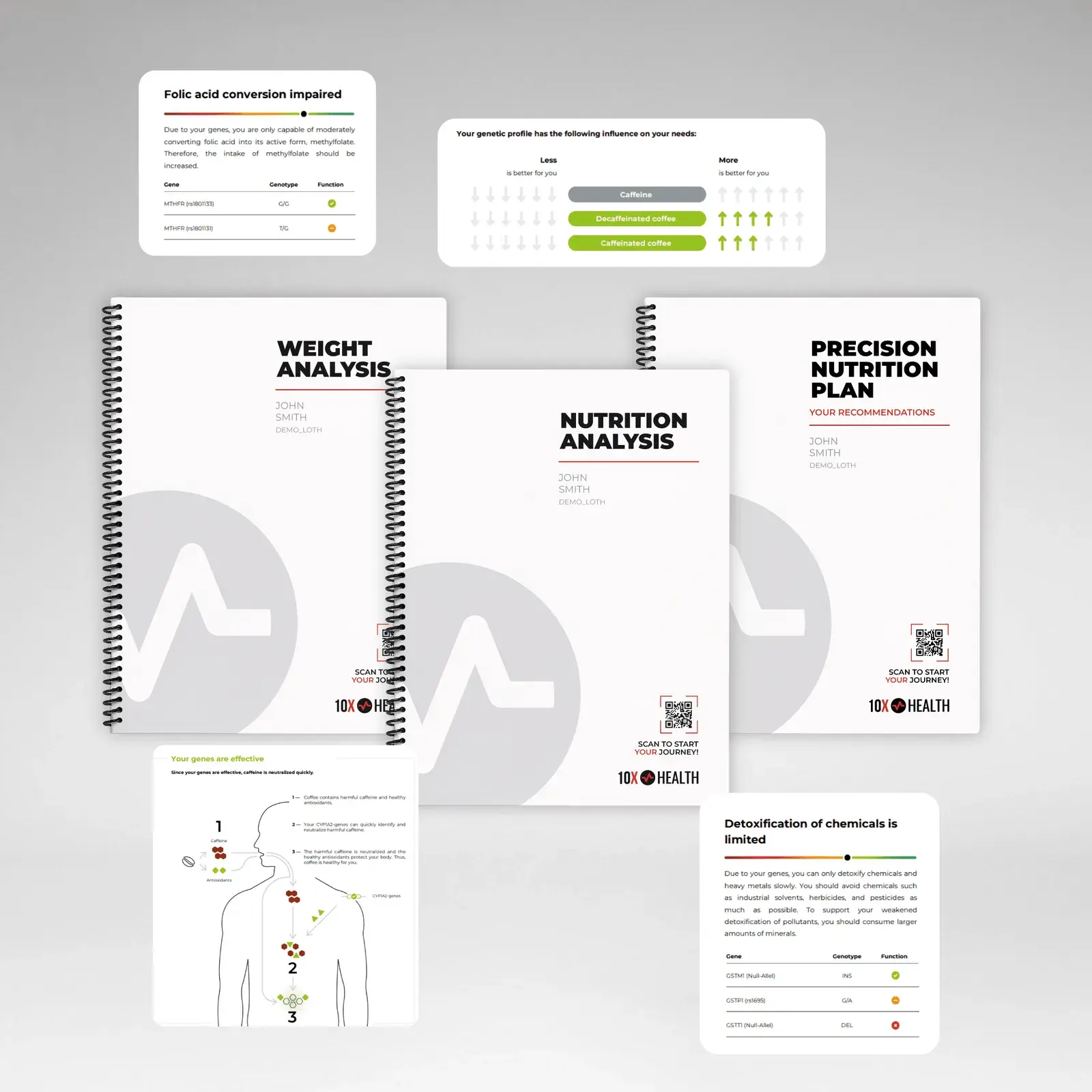
Sample personalized wellness report booklets
5 sections · 30 checkpoints

Free printable guide

The Longevity Starter Guide

A printable, one-sitting framework covering the five pillars most consistently linked with healthy aging: sleep, movement, nutrition, stress and personalized testing.

No spam, ever. Unsubscribe anytime. See our privacy policy.

Our partner store

Shop 10X Health

Genetic testing, the 10X Health System and daily supplements — straight from the official 10X Health store. Save 10% through our links.

Shop the store (opens 10X Health in a new tab; affiliate link)

Affiliate disclosure: Live10X is an independent educational site. If you purchase through our 10X Health links, we may earn a commission at no extra cost to you. It never changes what we write. Read our affiliate disclosure.

See everything we cover

These statements have not been evaluated by the Food and Drug Administration. These products are not intended to diagnose, treat, cure, or prevent any disease.

Stop guessing. Start with data — and a plan.

Take the free wellness assessment to find your highest-leverage focus areas, then explore genetic testing when you're ready to personalize further.

“Shop 10X Health” is an affiliate link — we may earn a commission at no extra cost to you. Affiliate disclosure

Free AssessmentShop · Save 10% (opens 10X Health in a new tab; affiliate link)