It's also one of the most misunderstood topics online. This guide explains what methylation actually is, the nutrients and genes involved, the difference between genetic potential and real-world function, and the practical, low-risk ways to support it.
On this page +
Quick facts
- Main methyl donor
- SAMe
- Core nutrients
- Folate, B12, B6, B2, choline
- Key genes
- MTHFR, MTR, MTRR, COMT
- Useful lab marker
- Homocysteine
Definition
What is methylation?
At its simplest, methylation is chemical tagging. Enzymes called methyltransferases move a methyl group (CH₃) from a donor molecule onto a target. The body's main methyl donor is S-adenosylmethionine (SAMe), and the targets include DNA, RNA, proteins, neurotransmitters and hormones.
The methylation cycle (part of one-carbon metabolism) keeps SAMe supplied. Dietary folate is converted into its active form, 5-methyltetrahydrofolate (5-MTHF), with help from the MTHFR enzyme. 5-MTHF and vitamin B12 then recycle homocysteine back into methionine, the precursor of SAMe. A backup route uses betaine (TMG) from foods like beets and spinach.
Why it matters
Why methylation matters
DNA methylation helps determine which genes are active in each cell — it's part of how a liver cell stays a liver cell. Patterns of DNA methylation shift with age, which is why they're used in biological age clocks.
Methylation is also central to recycling homocysteine, an amino acid that clinicians sometimes measure because elevated levels are associated in research with cardiovascular and cognitive concerns. And methyl groups are needed to produce creatine, phosphatidylcholine, melatonin and to metabolize neurotransmitters and estrogens — so methylation touches energy, mood, sleep and hormone balance.
At a glance
Key takeaways
- Methylation is the transfer of methyl groups that helps regulate genes, recycle homocysteine and build compounds like creatine and neurotransmitters.
- Folate, vitamin B12, B6, riboflavin (B2), choline and betaine are the core nutrients involved.
- Genes such as MTHFR, MTR, MTRR and COMT influence how efficiently parts of the cycle run.
- Homocysteine is a practical blood marker that reflects how well the cycle is functioning today.
- Food comes first; supplements such as methylfolate or TMG are best personalized with a professional.
The methylation cycle, step by step
You don't need to memorize biochemistry, but seeing the cycle makes it clear why several nutrients — not just one — matter.
- Activate folate: dietary folate (or folic acid) is converted through several steps into 5-MTHF. The MTHFR enzyme performs the final step.
- Recycle homocysteine: methionine synthase (MTR) uses 5-MTHF and vitamin B12 to convert homocysteine into methionine. MTRR keeps B12 in its working form.
- Make SAMe: methionine becomes SAMe, the universal methyl donor.
- Donate methyl groups: SAMe tags DNA, proteins and other molecules, becoming SAH and then homocysteine again.
- Backup and exit routes: betaine (TMG) can remethylate homocysteine via BHMT, or homocysteine can be converted — with vitamin B6 — into cysteine and glutathione.
Nutrients that power methylation
Most people can cover their methylation nutrients with a varied, whole-food diet. Here's where to find them.
- Folate: leafy greens, lentils, chickpeas, asparagus, broccoli, avocado.
- Vitamin B12: meat, fish, eggs and dairy; fortified foods or supplements for vegans.
- Vitamin B6: poultry, fish, potatoes, chickpeas and bananas.
- Riboflavin (B2): dairy, eggs, almonds and mushrooms — a cofactor for the MTHFR enzyme itself.
- Choline: eggs, liver, fish, soybeans and cruciferous vegetables.
- Betaine (TMG): beets, spinach, quinoa and wheat bran.
Genes that influence methylation
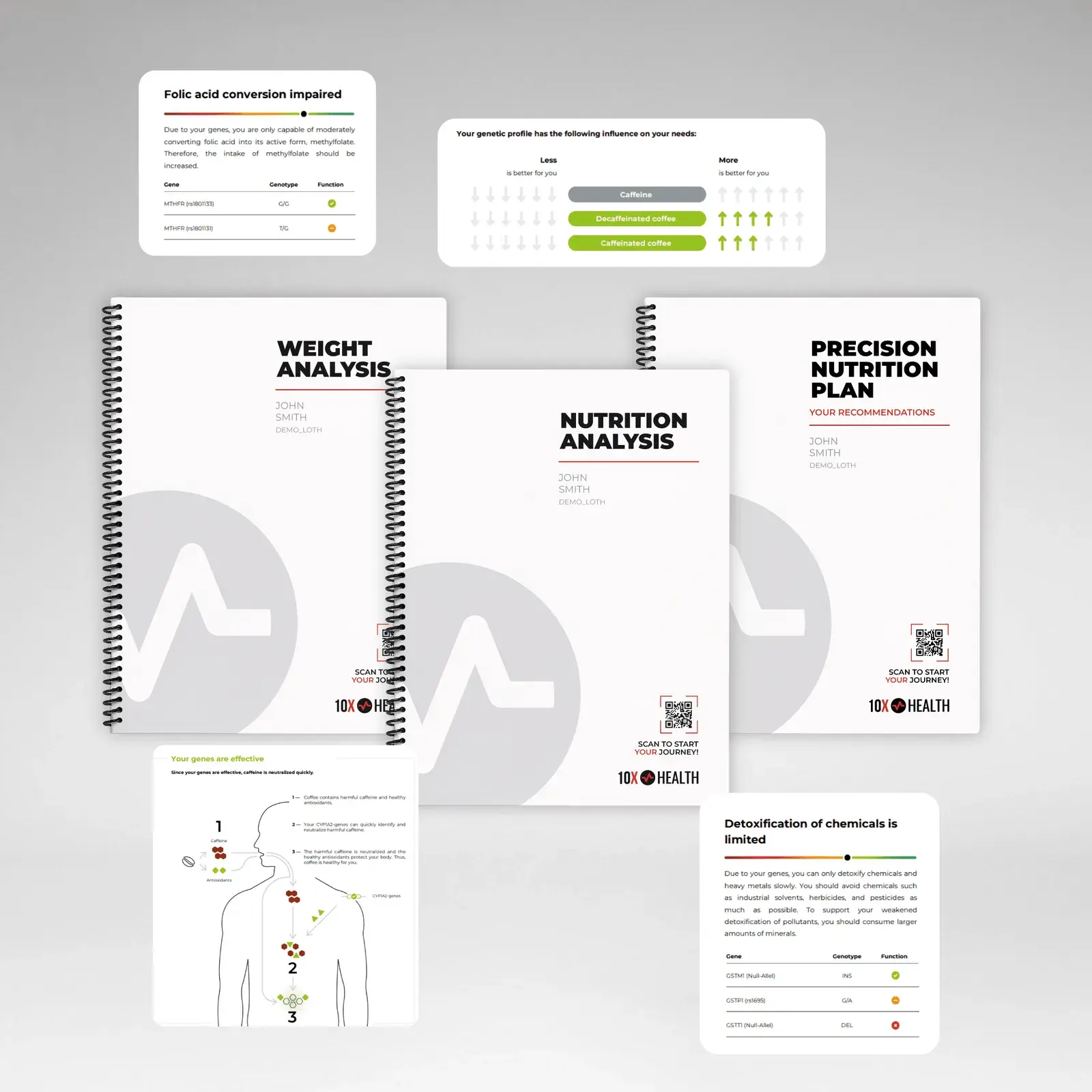
Several genes shape how efficiently the cycle runs. Common variants are normal — most people carry some — and their real-world impact depends heavily on nutrition. A wellness genetic test can show your genotype; blood work shows how the system is performing.
- MTHFR — activates folate; common variants C677T and A1298C can reduce enzyme activity.
- MTR and MTRR — recycle homocysteine using B12.
- COMT — uses SAMe to break down dopamine, adrenaline and catechol estrogens.
- BHMT — runs the betaine (TMG) backup pathway.
- CBS — moves homocysteine into the B6-dependent transsulfuration pathway.
- PEMT — helps the body make its own choline.
Get the Live10X Briefing
One evidence-informed longevity insight a week.
“Poor methylation” symptoms — and why to be cautious
Online lists attribute fatigue, brain fog, anxiety, poor sleep and more to “poor methylation.” The problem is that these symptoms are nonspecific: they have dozens of possible causes, from sleep debt and iron deficiency to thyroid issues and stress.
The more reliable path is measurement. Ask a clinician about homocysteine, vitamin B12 (sometimes with methylmalonic acid), and folate, then consider genetics as added context. That combination tells you far more than a symptom checklist.
How to support healthy methylation
These steps are low-risk, broadly healthy and support methylation regardless of your genotype.
- Eat folate-rich plants daily and include adequate protein.
- Make sure B12 intake is sufficient — especially if you're vegetarian, vegan, over 50 or take medications such as metformin or acid reducers.
- Include choline sources such as eggs, and betaine sources such as beets and spinach.
- Limit alcohol, which interferes with folate absorption and metabolism, and don't smoke.
- Protect sleep and manage stress — both influence homocysteine-related habits and nutrient needs.
- Discuss supplement forms (methylfolate, methylcobalamin, TMG) and doses with a professional; high-dose folic acid can mask a B12 deficiency.
The bottom line
Methylation is a constant, whole-body process that depends on a team of nutrients — folate, B12, B6, riboflavin, choline and betaine — and is shaped by genes like MTHFR, MTR and COMT. Focus on food first, check homocysteine and B-vitamin status with a clinician, and use genetic testing to personalize rather than to panic. Next, read our MTHFR guide or compare methylfolate vs. folic acid.
FAQ
Frequently asked questions
What is the difference between methylation and DNA methylation?
What is a methylation genetic test?
Can you improve methylation naturally?
What does high homocysteine mean?
Is TMG the same as methylfolate?
People also ask
More questions people ask
What are methylation genes?
Does coffee affect methylation?
Who should consider methylation testing?
How long does it take to change homocysteine levels?
Answers
Related questions
Key terms
Citations
Sources & references
- [1]Folate: Fact Sheet for Health ProfessionalsNIH Office of Dietary Supplements · Government resourceView source : Folate: Fact Sheet for Health Professionals (opens in a new tab)
- [2]Vitamin B12: Fact Sheet for Health ProfessionalsNIH Office of Dietary Supplements · Government resourceView source : Vitamin B12: Fact Sheet for Health Professionals (opens in a new tab)
- [3]A candidate genetic risk factor for vascular disease: a common mutation in methylenetetrahydrofolate reductaseFrosst P, Blom HJ, Milos R, et al.. Nature Genetics, 1995 · Laboratory studyView source : A candidate genetic risk factor for vascular disease: a common mutation in methylenetetrahydrofolate reductase (opens in a new tab)
- [4]MTHFR geneMedlinePlus Genetics, U.S. National Library of Medicine · Reference databaseView source : MTHFR gene (opens in a new tab)
Study links open a PubMed search for the exact title, so they keep working even if a journal changes its URL.