Nutrigenomics is the science of those gene–nutrient interactions. This guide covers the best-studied examples, where the evidence is still developing, and how to use genetic nutrition insights without overcomplicating your plate.
On this page +
Quick facts
- Also called
- Nutritional genomics
- Classic example
- MTHFR & folate
- Popular example
- CYP1A2 & caffeine
- Best used with
- Blood work + goals
Definition
What is nutrigenomics?
Strictly speaking, nutrigenetics looks at how your genetic variants affect your response to nutrients, while nutrigenomics looks at how nutrients influence gene expression. In everyday use, “nutrigenomics” covers both directions of the relationship.
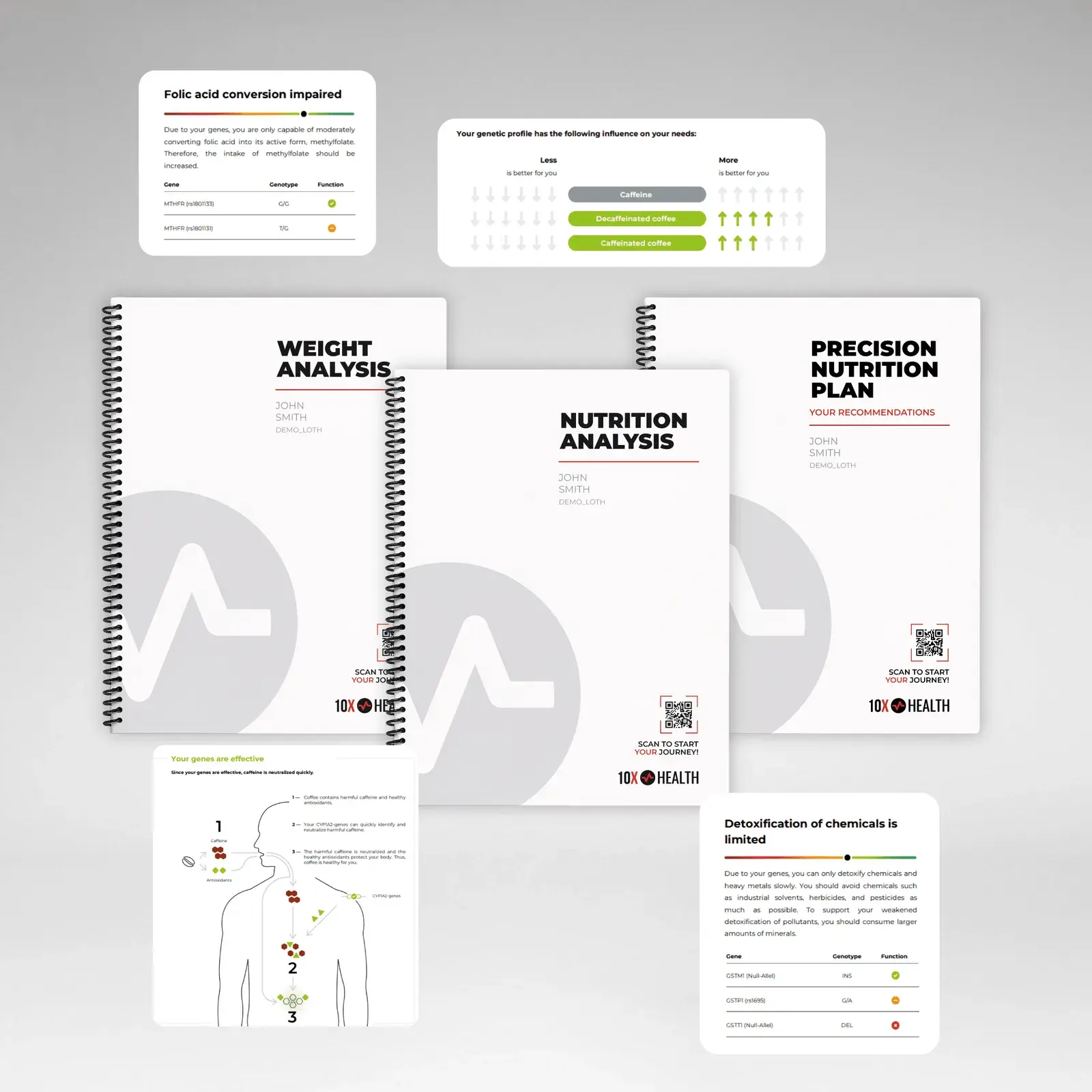
A nutrigenomic report translates your genotype at nutrition-related genes into practical tendencies: higher folate needs, slower caffeine clearance, lower lactase persistence, or reduced conversion of beta-carotene to vitamin A. It's one input into a personalized nutrition plan — alongside preferences, labs and goals.
Why it matters
Why nutrigenomics matters
Population nutrition guidelines are designed to cover most people, but individual needs vary. Genetics is one reason. Knowing that you're a slow caffeine metabolizer or carry an MTHFR variant helps explain past experiences and guides small, targeted adjustments.
It also helps you prioritize. Rather than chasing every nutrition trend, you can focus on the few areas where your biology suggests extra attention — then confirm with blood work.
At a glance
Key takeaways
- Nutrigenomics covers how genes affect nutrient response and how nutrients affect gene expression.
- The best-supported examples include MTHFR (folate), CYP1A2 (caffeine), FUT2 (B12), LCT (lactose) and BCMO1 (vitamin A).
- Genetic insights add context; they don't replace a varied, minimally processed diet.
- Studies show personalized advice improves diets, but genetic data hasn't consistently beaten personalization alone.
- Use results to prioritize a few changes, then confirm with labs and how you feel.
Well-studied gene–nutrient examples
These are among the more replicated relationships in nutrition genetics.
- MTHFR & folate: variants reduce folate activation and can raise homocysteine when folate intake is low. See MTHFR.
- CYP1A2 & caffeine: variants influence how quickly the liver clears caffeine. Read caffeine and your genes.
- FUT2 & vitamin B12: common variants are associated with differences in circulating B12 levels.
- LCT & lactose: lactase persistence into adulthood is largely genetic.
- BCMO1 & vitamin A: variants can reduce conversion of plant beta-carotene into active vitamin A.
- GC & vitamin D: variants in the vitamin D binding protein gene are associated with vitamin D levels.
- GSTM1/GSTT1 & detoxification: “null” variants (gene deletions) affect certain detox enzymes; cruciferous vegetables are often discussed in this context.
Genes with medical implications
Some panels include genes such as APOE, which influences lipid metabolism and is also associated with Alzheimer's risk, or HFE, linked to iron overload. These carry medical weight beyond nutrition. If a test includes them, consider whether you want that information and plan to discuss results with a clinician or genetic counselor.
Where the science is still developing
The large European Food4Me trial found that personalized nutrition advice improved diets more than generic advice — but adding genetic information didn't significantly improve results beyond personalization based on diet and biomarkers. That's a useful reality check: genetics is helpful context, not magic.
Many diet-type recommendations (for example, “low-fat vs. low-carb for your genes”) rest on early or inconsistent evidence. Be skeptical of reports that assign a rigid diet based on a handful of SNPs.
Get the Live10X Briefing
One evidence-informed longevity insight a week.
How to use nutrigenomic insights
- Start with the highest-confidence findings (folate, caffeine, lactose, B12).
- Make food-first adjustments before adding supplements.
- Confirm with labs — folate, B12, vitamin D, homocysteine, ferritin.
- Track how you feel for 4–8 weeks after each change.
- Review your full report with a qualified professional, especially medical-grade genes.
The bottom line
Nutrigenomics helps explain why the same diet works differently for different people. Use it to prioritize — folate, caffeine, B12, lactose and vitamin A conversion are the strongest examples — while remembering that a varied, whole-food diet remains the foundation. Confirm findings with labs, change one thing at a time, and keep a professional involved.
FAQ
Frequently asked questions
Is nutrigenomics scientifically proven?
Can nutrigenomics help with weight loss?
What's the difference between nutrigenomics and a food sensitivity test?
Do I need a dietitian to interpret results?
People also ask
More questions people ask
What genes affect vitamin absorption?
Are fast caffeine metabolizers healthier coffee drinkers?
Can diet change gene expression?
Answers
Related questions
Key terms
Citations
Sources & references
- [1]Coffee, CYP1A2 genotype, and risk of myocardial infarctionCornelis MC, El-Sohemy A, Kabagambe EK, Campos H. JAMA, 2006 · Cohort studyView source : Coffee, CYP1A2 genotype, and risk of myocardial infarction (opens in a new tab)
- [2]Folate: Fact Sheet for Health ProfessionalsNIH Office of Dietary Supplements · Government resourceView source : Folate: Fact Sheet for Health Professionals (opens in a new tab)
- [3]Effect of personalized nutrition on health-related behaviour change: evidence from the Food4Me European randomized controlled trialCelis-Morales C, Livingstone KM, Marsaux CF, et al.. International Journal of Epidemiology, 2017 · Randomized trialView source : Effect of personalized nutrition on health-related behaviour change: evidence from the Food4Me European randomized controlled trial (opens in a new tab)
Study links open a PubMed search for the exact title, so they keep working even if a journal changes its URL.