Biohacking · Answer
Does blue light really affect sleep?
Quick answer
Does blue light really affect sleep?
Yes, evening light exposure — including blue-rich light from screens — can delay sleep. In a controlled study, reading on a light-emitting e-reader before bed suppressed melatonin, delayed sleep onset and reduced next-morning alertness compared with a printed book. Brightness, duration and engaging content also matter, so dimming screens and stopping earlier helps most.
At a glance
Key takeaways
- Evening light suppresses melatonin, the hormone that signals night to the body.
- E-reader use before bed delayed sleep and reduced morning alertness in a lab study.
- Brightness and duration matter as well as color.
- Night modes help a little; less screen time before bed helps more.
Light is the most powerful signal for your body clock. The question is how much evening screen light really matters.
How light affects sleep
Specialized cells in the eye are especially sensitive to short-wavelength (blue) light. They send signals to the brain's master clock, which regulates melatonin — the hormone that rises in the evening and signals it's time to sleep. Light in the evening suppresses melatonin and can shift your circadian rhythm later.
What the research shows
In a 2015 study published in PNAS, participants read either on a light-emitting e-reader or a printed book for about four hours before bed over several nights. With the e-reader, they:
- Had suppressed evening melatonin
- Took longer to fall asleep
- Had less REM sleep
- Felt less alert the next morning
That's a strong effect — though it came from hours of reading on a bright device in a controlled setting. Everyday use may have smaller effects.
It's not only blue light
- Brightness: brighter screens and room lights matter.
- Duration: hours of use have more effect than a few minutes.
- Content: stimulating content (work email, games) keeps the brain alert.
What helps most
- Stop screen use 30–60 minutes before bed when you can.
- Dim screens and room lights in the evening.
- Use night mode or warmer color settings.
- Get bright daylight in the morning.
Adults need at least 7 hours of sleep, and good light habits make that easier. For more strategies, see our sleep optimization hub.
People also ask
More questions people ask
Do blue light glasses work?
How long before bed should I stop using screens?
Does morning light help sleep?
Answers
More answers
Citations
Sources & references
- [1]Evening use of light-emitting eReaders negatively affects sleep, circadian timing, and next-morning alertnessChang AM, Aeschbach D, Duffy JF, Czeisler CA. Proceedings of the National Academy of Sciences, 2015 · Randomized trialView source : Evening use of light-emitting eReaders negatively affects sleep, circadian timing, and next-morning alertness (opens in a new tab)
- [2]Recommended Amount of Sleep for a Healthy Adult: A Joint Consensus Statement of the American Academy of Sleep Medicine and Sleep Research SocietyWatson NF, Badr MS, Belenky G, et al.. Sleep, 2015 · Consensus statementView source : Recommended Amount of Sleep for a Healthy Adult: A Joint Consensus Statement of the American Academy of Sleep Medicine and Sleep Research Society (opens in a new tab)
Study links open a PubMed search for the exact title, so they keep working even if a journal changes its URL.
Related guides
Go deeper
Our partner store
Shop 10X Health
Genetic testing, the 10X Health System and daily supplements — straight from the official 10X Health store. Save 10% through our links.
- Save 10%
 New · Weight & metabolism10X Health Metabolism Genetic Test Shop now (opens 10X Health in a new tab; affiliate link)
- Save 10%
 Wellness genetics10X Health Methylation + Genetic Test Shop now (opens 10X Health in a new tab; affiliate link)
- Save 10%
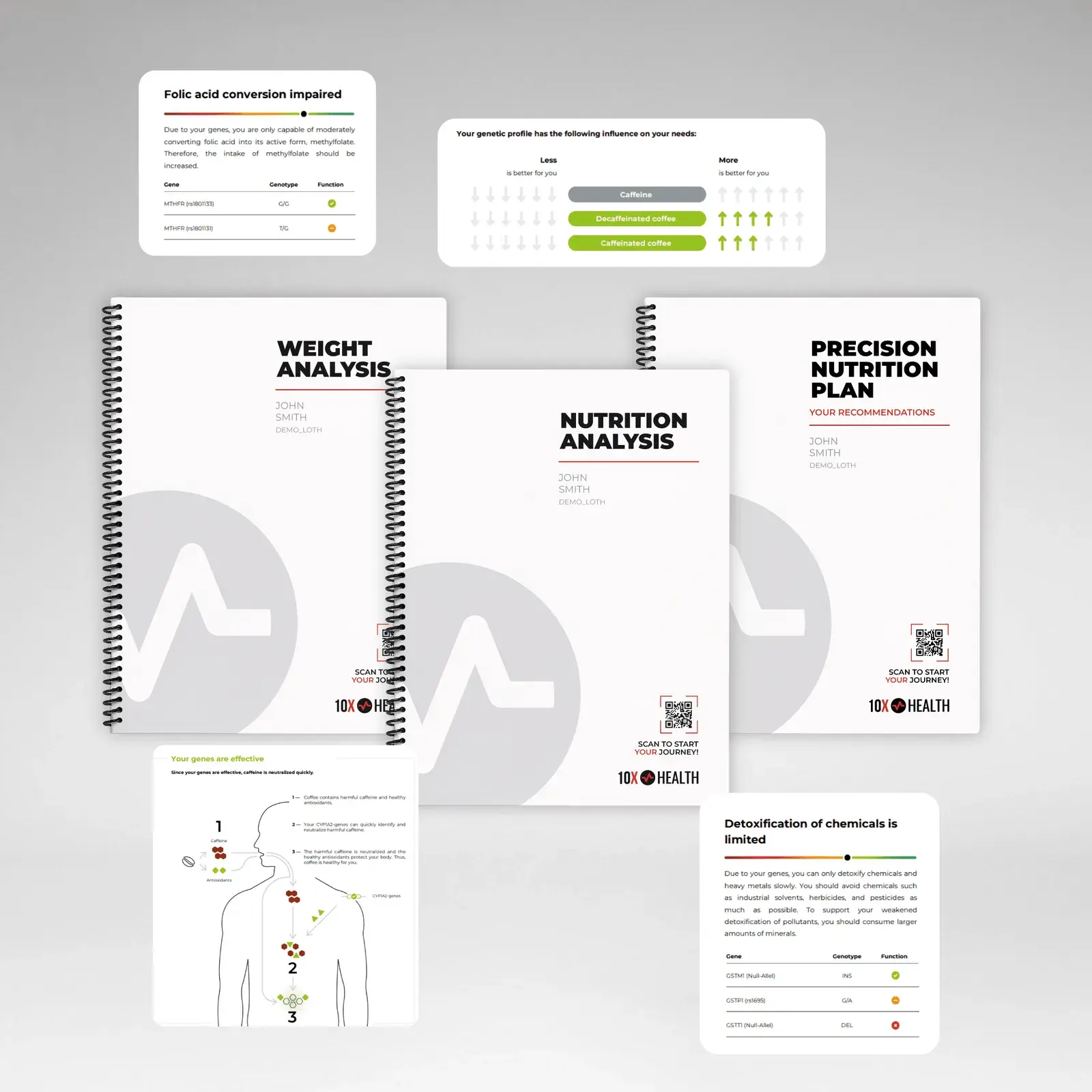 Personalized approachThe 10X Health System Shop now (opens 10X Health in a new tab; affiliate link)
- Save 10%
 Daily foundations10X Health Foundations Shop now (opens 10X Health in a new tab; affiliate link)
Affiliate disclosure: Live10X is an independent educational site. If you purchase through our 10X Health links, we may earn a commission at no extra cost to you. It never changes what we write. Read our affiliate disclosure.
See everything we coverThese statements have not been evaluated by the Food and Drug Administration. These products are not intended to diagnose, treat, cure, or prevent any disease.
Stop guessing. Start with data — and a plan.
Take the free wellness assessment to find your highest-leverage focus areas, then explore genetic testing when you're ready to personalize further.
“Shop 10X Health” is an affiliate link — we may earn a commission at no extra cost to you. Affiliate disclosure