Biohacking · Answer
How much sleep do adults need?
Quick answer
How much sleep do adults need?
Most adults need at least 7 hours of sleep a night on a regular basis, and 7–9 hours suits the majority of people. That's the joint consensus of the American Academy of Sleep Medicine and the Sleep Research Society. Consistently sleeping less than 7 hours is linked with poorer health, mood and performance.
At a glance
Key takeaways
- Adults should aim for 7 or more hours of sleep a night; 7–9 hours fits most people.
- Regularly sleeping under 7 hours is associated with weight gain, poorer mood, impaired performance and higher health risks.
- A consistent wake time helps as much as total hours.
- Persistent tiredness despite enough time in bed is worth discussing with a clinician.
Sleep needs vary a little from person to person, but the evidence points to a clear baseline for adults: 7 or more hours a night, regularly. In 2015 the American Academy of Sleep Medicine and the Sleep Research Society reviewed the research and issued a joint consensus statement making exactly that recommendation for adults aged 18–60.
What happens when you sleep less than 7 hours?
The consensus panel linked regularly sleeping under 7 hours with weight gain and obesity, diabetes, high blood pressure, heart disease, depression, impaired immune function, more pain, more errors and a higher risk of accidents. A large meta-analysis of prospective studies also found that both short and very long habitual sleep were associated with higher all-cause mortality.
Short sleep also hits day-to-day performance: focus, reaction time, mood and appetite control all suffer — and people usually underestimate how impaired they are.
Why consistency matters too
Hours are only half the story. Going to bed and — especially — waking up at roughly the same time every day keeps your circadian rhythm stable, which makes it easier to fall asleep and wake refreshed. Morning daylight, a cool dark bedroom and a caffeine cutoff at least 8 hours before bed all help.
How to get to 7+ hours
- Work backward from your wake time. If you wake at 6:30, protect a 10:30–11:00 p.m. lights-out.
- Keep the schedule on weekends within about an hour.
- Build a 30-minute wind-down: dim lights, screens away, something relaxing.
- Get outdoor light soon after waking to anchor your body clock.
See our sleep optimization guide and the sleep optimization checklist for a full plan.
When to talk to a clinician
If you routinely sleep 7–9 hours and still feel exhausted, snore loudly, stop breathing at night or can't fall or stay asleep, talk with a healthcare professional. Conditions such as sleep apnea and insomnia are common and treatable.
People also ask
More questions people ask
Is 6 hours of sleep enough?
Can you catch up on sleep on weekends?
Is sleeping 9 or more hours bad?
Answers
More answers
Citations
Sources & references
- [1]Recommended Amount of Sleep for a Healthy Adult: A Joint Consensus Statement of the American Academy of Sleep Medicine and Sleep Research SocietyWatson NF, Badr MS, Belenky G, et al.. Sleep, 2015 · Consensus statementView source : Recommended Amount of Sleep for a Healthy Adult: A Joint Consensus Statement of the American Academy of Sleep Medicine and Sleep Research Society (opens in a new tab)
- [2]Sleep duration and all-cause mortality: a systematic review and meta-analysis of prospective studiesCappuccio FP, D'Elia L, Strazzullo P, Miller MA. Sleep, 2010 · Meta-analysisView source : Sleep duration and all-cause mortality: a systematic review and meta-analysis of prospective studies (opens in a new tab)
Study links open a PubMed search for the exact title, so they keep working even if a journal changes its URL.
Related guides
Go deeper
Our partner store
Shop 10X Health
Genetic testing, the 10X Health System and daily supplements — straight from the official 10X Health store. Save 10% through our links.
- Save 10%
 New · Weight & metabolism10X Health Metabolism Genetic Test Shop now (opens 10X Health in a new tab; affiliate link)
- Save 10%
 Wellness genetics10X Health Methylation + Genetic Test Shop now (opens 10X Health in a new tab; affiliate link)
- Save 10%
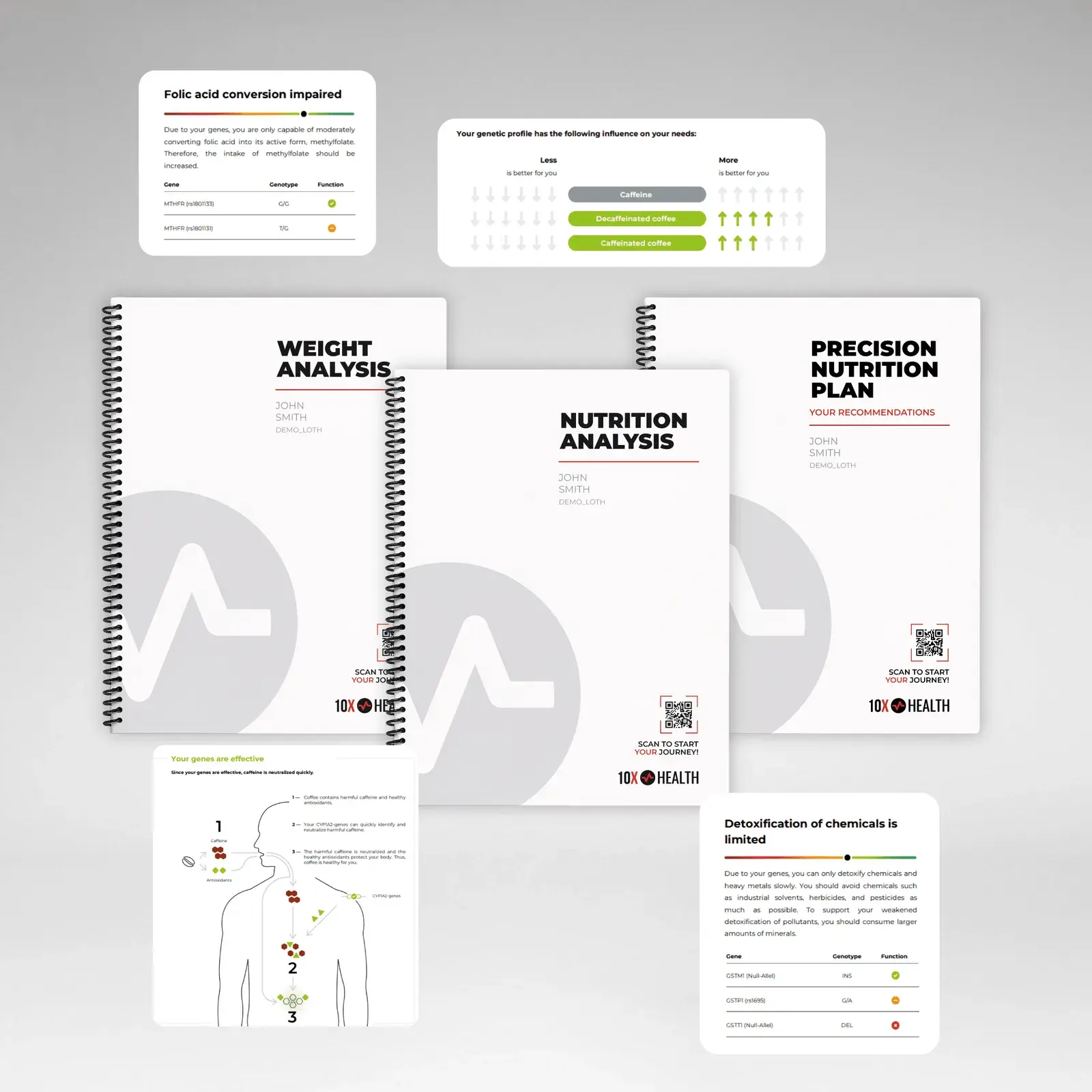 Personalized approachThe 10X Health System Shop now (opens 10X Health in a new tab; affiliate link)
- Save 10%
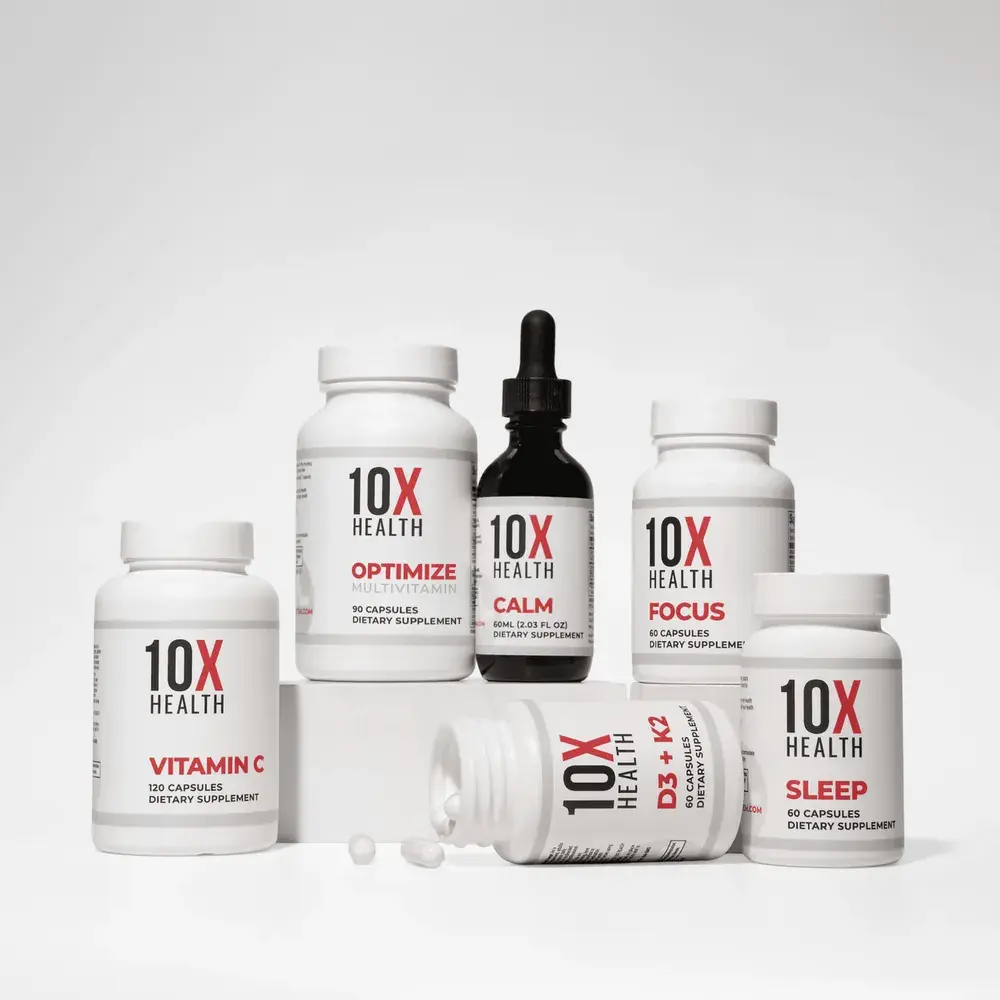 Daily foundations10X Health Foundations Shop now (opens 10X Health in a new tab; affiliate link)
Affiliate disclosure: Live10X is an independent educational site. If you purchase through our 10X Health links, we may earn a commission at no extra cost to you. It never changes what we write. Read our affiliate disclosure.
See everything we coverThese statements have not been evaluated by the Food and Drug Administration. These products are not intended to diagnose, treat, cure, or prevent any disease.
Stop guessing. Start with data — and a plan.
Take the free wellness assessment to find your highest-leverage focus areas, then explore genetic testing when you're ready to personalize further.
“Shop 10X Health” is an affiliate link — we may earn a commission at no extra cost to you. Affiliate disclosure