Performance · Answer
How much water should you drink a day?
Quick answer
How much water should you drink a day?
The National Academies set adequate total water intake at about 3.7 liters a day for men and 2.7 liters for women, from all drinks and food. Since food provides roughly 20%, that's about 13 cups of fluids for men and 9 cups for women. Needs rise with heat, exercise and illness. Pale yellow urine is a simple hydration check.
At a glance
Key takeaways
- Total water guidance: ~3.7 L/day for men and ~2.7 L/day for women.
- About 20% of water typically comes from food.
- Needs rise with heat, activity, illness, pregnancy and breastfeeding.
- Pale yellow urine and rarely feeling thirsty are good signs.
Hydration advice ranges from "8 glasses a day" to carrying a gallon jug everywhere. Here's what the official guidance actually says.
The official recommendations
In 2004, the National Academies of Sciences, Engineering, and Medicine set Adequate Intakes for total water — from all beverages and foods:
- Men: about 3.7 liters (125 oz) per day
- Women: about 2.7 liters (91 oz) per day
Because food provides roughly 20% of total water, that works out to about 13 cups of fluids for men and 9 cups for women. These are averages for healthy people in temperate climates, not strict targets.
Why hydration matters
A 2010 review in Nutrition Reviews summarized how water affects physical and cognitive function. Even mild dehydration is associated with impaired mood, concentration and physical performance, and it can contribute to fatigue — see why am I tired all the time. Hydration also affects focus; read what foods help you focus.
When you need more
- Hot or humid weather
- Exercise and heavy sweating
- Illness with fever, vomiting or diarrhea
- Pregnancy and breastfeeding
- High altitude
Simple hydration checks
- Urine color: pale yellow is ideal.
- Thirst: occasional thirst is normal; constant thirst is a cue.
- Routine: have a glass with each meal and keep water visible.
What counts
Water is best, but milk, tea, coffee and water-rich foods like fruit, vegetables and soup all contribute. Sugary drinks add calories without much benefit.
Some people, such as those with heart or kidney conditions, may need to limit fluids — follow your clinician's advice. For more energy strategies, see our energy optimization guide.
People also ask
More questions people ask
Does coffee count toward hydration?
Can you drink too much water?
Is the 8 glasses a day rule true?
Answers
More answers
Citations
Sources & references
- [1]Dietary Reference Intakes for Water, Potassium, Sodium, Chloride, and SulfateNational Academies of Sciences, Engineering, and Medicine · Government resourceView source : Dietary Reference Intakes for Water, Potassium, Sodium, Chloride, and Sulfate (opens in a new tab)
- [2]Water, hydration, and healthPopkin BM, D'Anci KE, Rosenberg IH. Nutrition Reviews, 2010 · ReviewView source : Water, hydration, and health (opens in a new tab)
Study links open a PubMed search for the exact title, so they keep working even if a journal changes its URL.
Related guides
Go deeper
Our partner store
Shop 10X Health
Genetic testing, the 10X Health System and daily supplements — straight from the official 10X Health store. Save 10% through our links.
- Save 10%
 New · Weight & metabolism10X Health Metabolism Genetic Test Shop now (opens 10X Health in a new tab; affiliate link)
- Save 10%
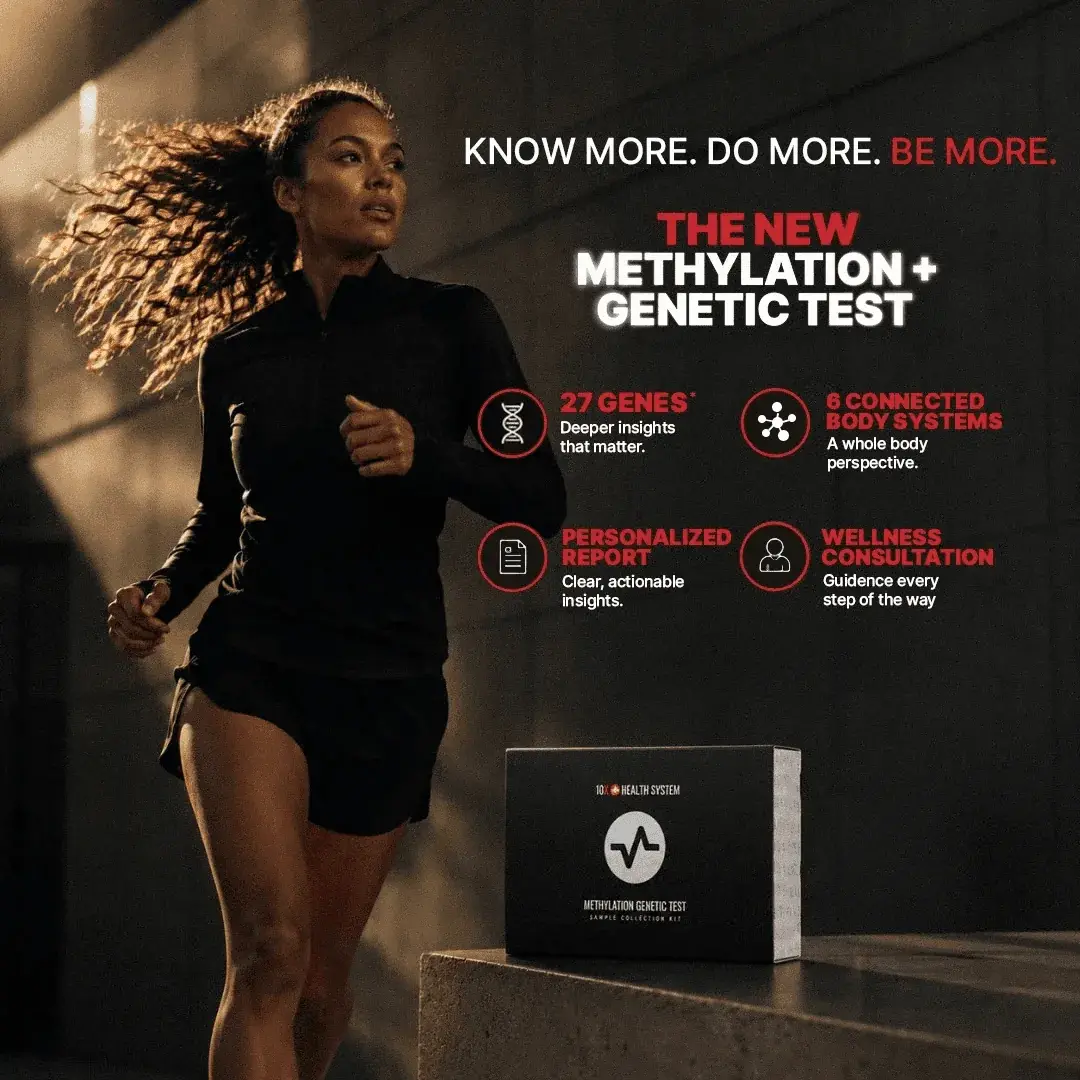 Wellness genetics10X Health Methylation + Genetic Test Shop now (opens 10X Health in a new tab; affiliate link)
- Save 10%
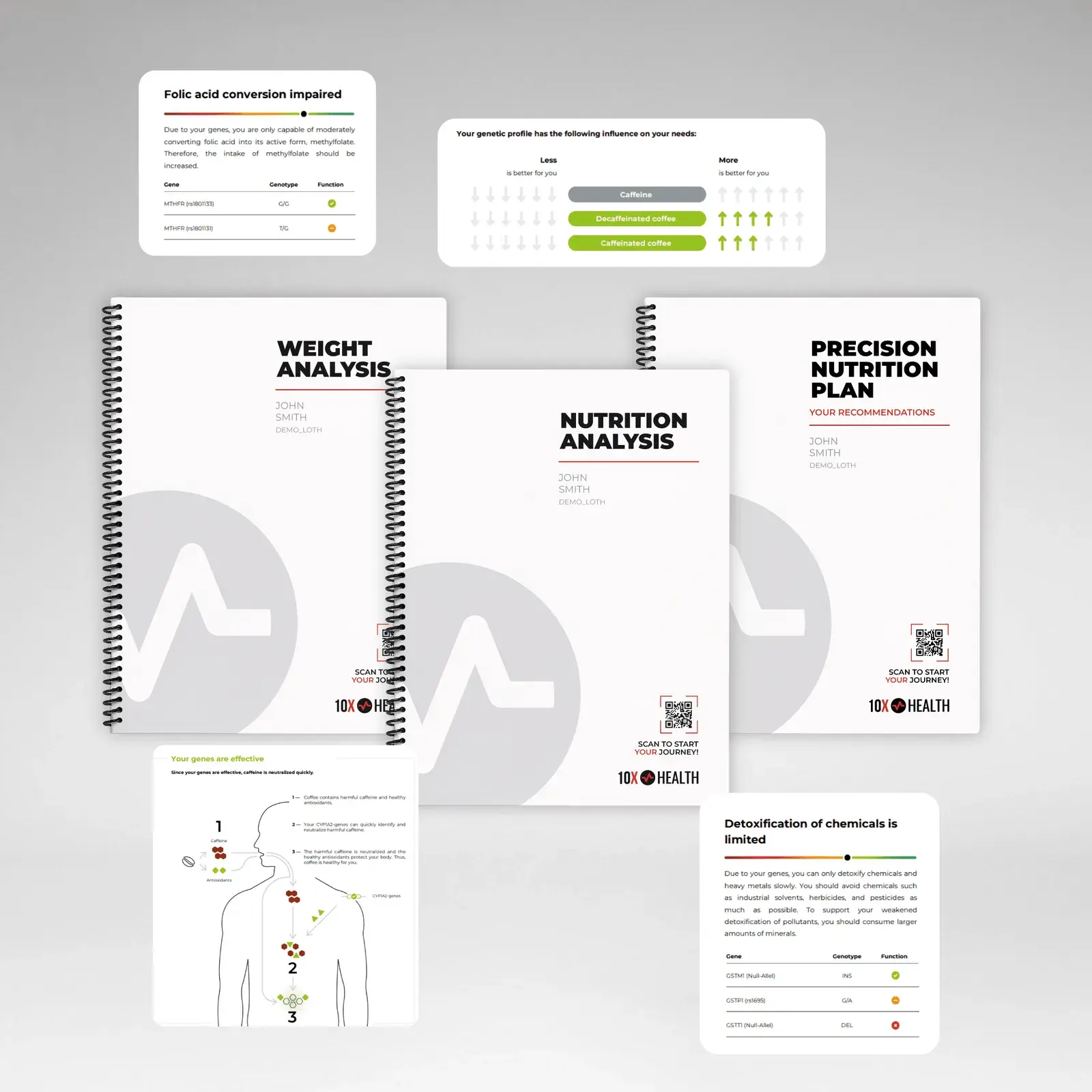 Personalized approachThe 10X Health System Shop now (opens 10X Health in a new tab; affiliate link)
- Save 10%
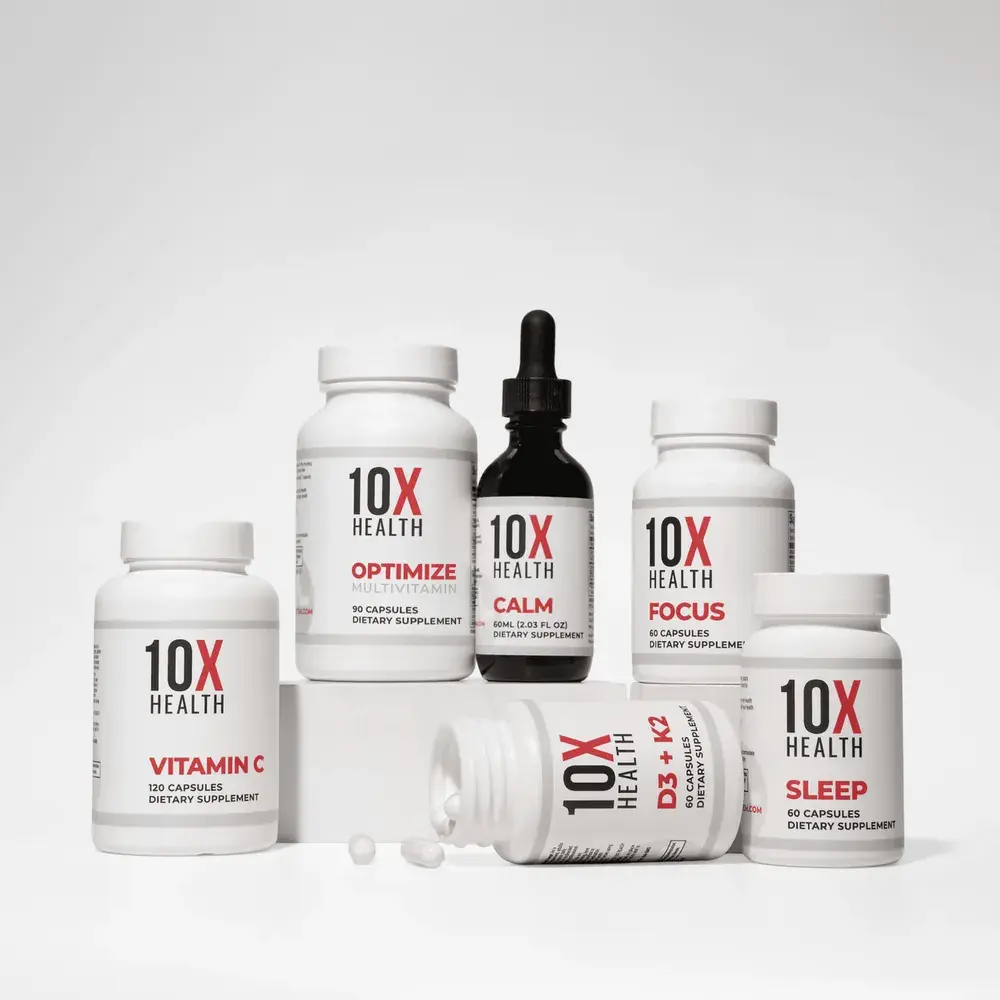 Daily foundations10X Health Foundations Shop now (opens 10X Health in a new tab; affiliate link)
Affiliate disclosure: Live10X is an independent educational site. If you purchase through our 10X Health links, we may earn a commission at no extra cost to you. It never changes what we write. Read our affiliate disclosure.
See everything we coverThese statements have not been evaluated by the Food and Drug Administration. These products are not intended to diagnose, treat, cure, or prevent any disease.
Stop guessing. Start with data — and a plan.
Take the free wellness assessment to find your highest-leverage focus areas, then explore genetic testing when you're ready to personalize further.
“Shop 10X Health” is an affiliate link — we may earn a commission at no extra cost to you. Affiliate disclosure