Performance · Answer
What foods help you focus?
Quick answer
What foods help you focus?
The foods most likely to help focus are the basics: enough water, balanced meals with protein, fiber and complex carbohydrates to avoid energy crashes, and moderate caffeine. Research shows even mild dehydration can impair attention, and caffeine reliably improves alertness. Fatty fish, berries and leafy greens support long-term brain health as part of an overall healthy diet.
At a glance
Key takeaways
- Mild dehydration is linked to poorer attention and mood.
- Caffeine improves alertness and reaction time at moderate doses.
- Balanced meals with fiber and protein help avoid energy dips.
- No single 'brain food' replaces sleep and an overall healthy diet.
There's no magic "focus food," but what and how you eat and drink measurably affects attention and mental energy.
1. Water
A 2012 review on hydration and cognition found that dehydration of around 2% of body weight can impair attention, memory and mood, especially during heat or exercise. Keeping water nearby is the easiest focus upgrade. See how much water to drink a day.
2. Caffeine, used wisely
A 2016 review of caffeine's effects on cognitive and physical performance concluded that moderate doses (roughly 40–300 mg) improve alertness, attention and reaction time, particularly when you're tired. Timing matters: caffeine late in the day can disrupt sleep and hurt tomorrow's focus. Read the best time to drink coffee.
3. Balanced meals
Meals built around refined carbohydrates can lead to energy swings. For steadier energy, combine:
- Protein: eggs, yogurt, fish, legumes, tofu.
- Fiber-rich carbs: oats, whole grains, beans, fruit.
- Healthy fats: nuts, olive oil, avocado.
4. Long-term brain-supporting foods
Diets rich in vegetables, berries, leafy greens, nuts and fatty fish are associated with better cognitive aging in observational studies. These don't deliver an instant boost, but they support brain health over years.
What doesn't help much
Energy drinks with lots of sugar, large heavy lunches, and relying on supplements marketed as "nootropics" without good evidence.
Food is only part of focus
Sleep, movement breaks and fewer distractions often matter more. Build a complete strategy with our focus guide.
A simple test: note your focus after different breakfasts for a week and keep what works.
People also ask
More questions people ask
Does sugar help you focus?
Is caffeine good for focus?
What should I eat before a big exam or meeting?
Answers
More answers
Citations
Sources & references
- [1]Cognitive performance and dehydrationAdan A. Journal of the American College of Nutrition, 2012 · ReviewView source : Cognitive performance and dehydration (opens in a new tab)
- [2]A review of caffeine's effects on cognitive, physical and occupational performanceMcLellan TM, Caldwell JA, Lieberman HR. Neuroscience & Biobehavioral Reviews, 2016 · ReviewView source : A review of caffeine's effects on cognitive, physical and occupational performance (opens in a new tab)
Study links open a PubMed search for the exact title, so they keep working even if a journal changes its URL.
Related guides
Go deeper
Our partner store
Shop 10X Health
Genetic testing, the 10X Health System and daily supplements — straight from the official 10X Health store. Save 10% through our links.
- Save 10%
 New · Weight & metabolism10X Health Metabolism Genetic Test Shop now (opens 10X Health in a new tab; affiliate link)
- Save 10%
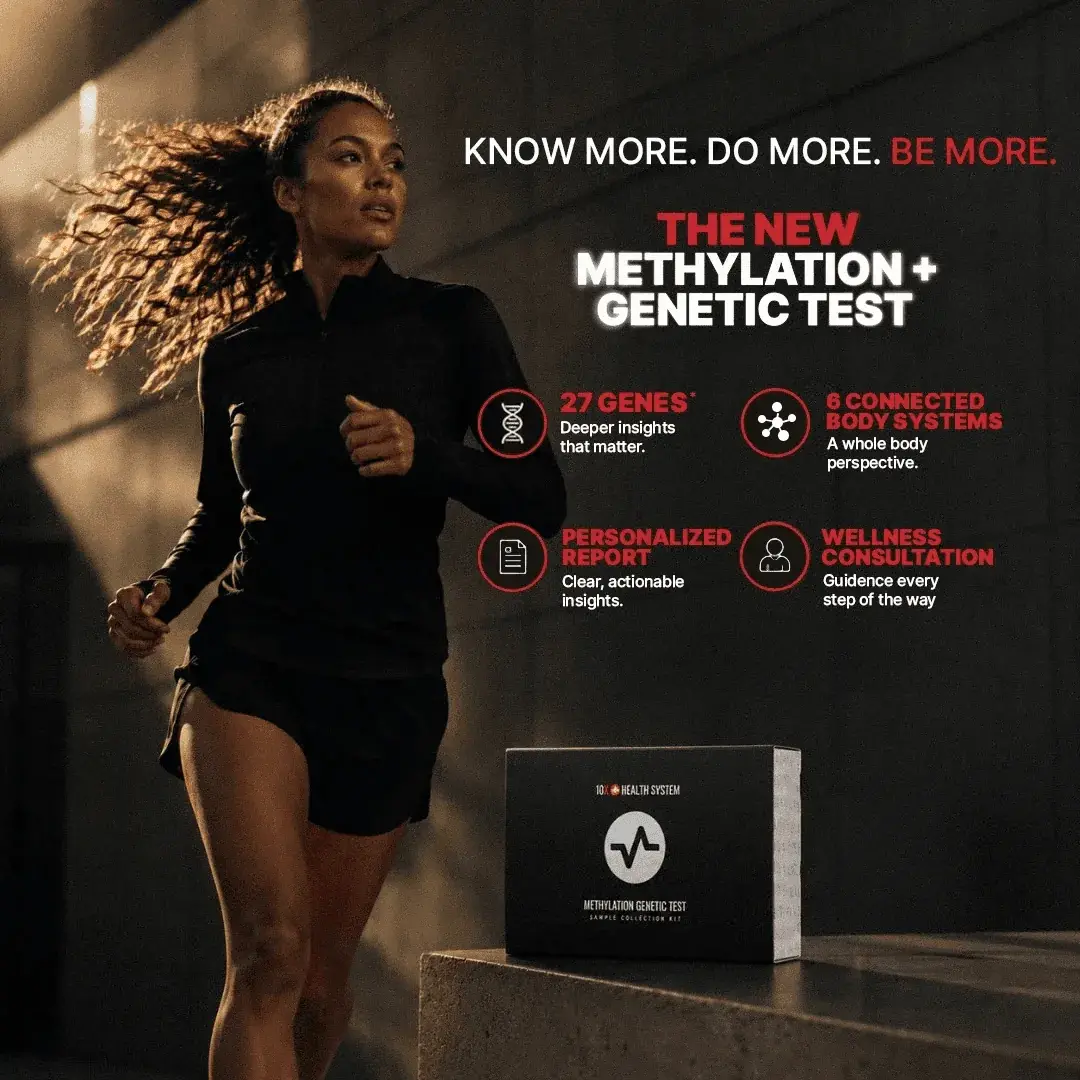 Wellness genetics10X Health Methylation + Genetic Test Shop now (opens 10X Health in a new tab; affiliate link)
- Save 10%
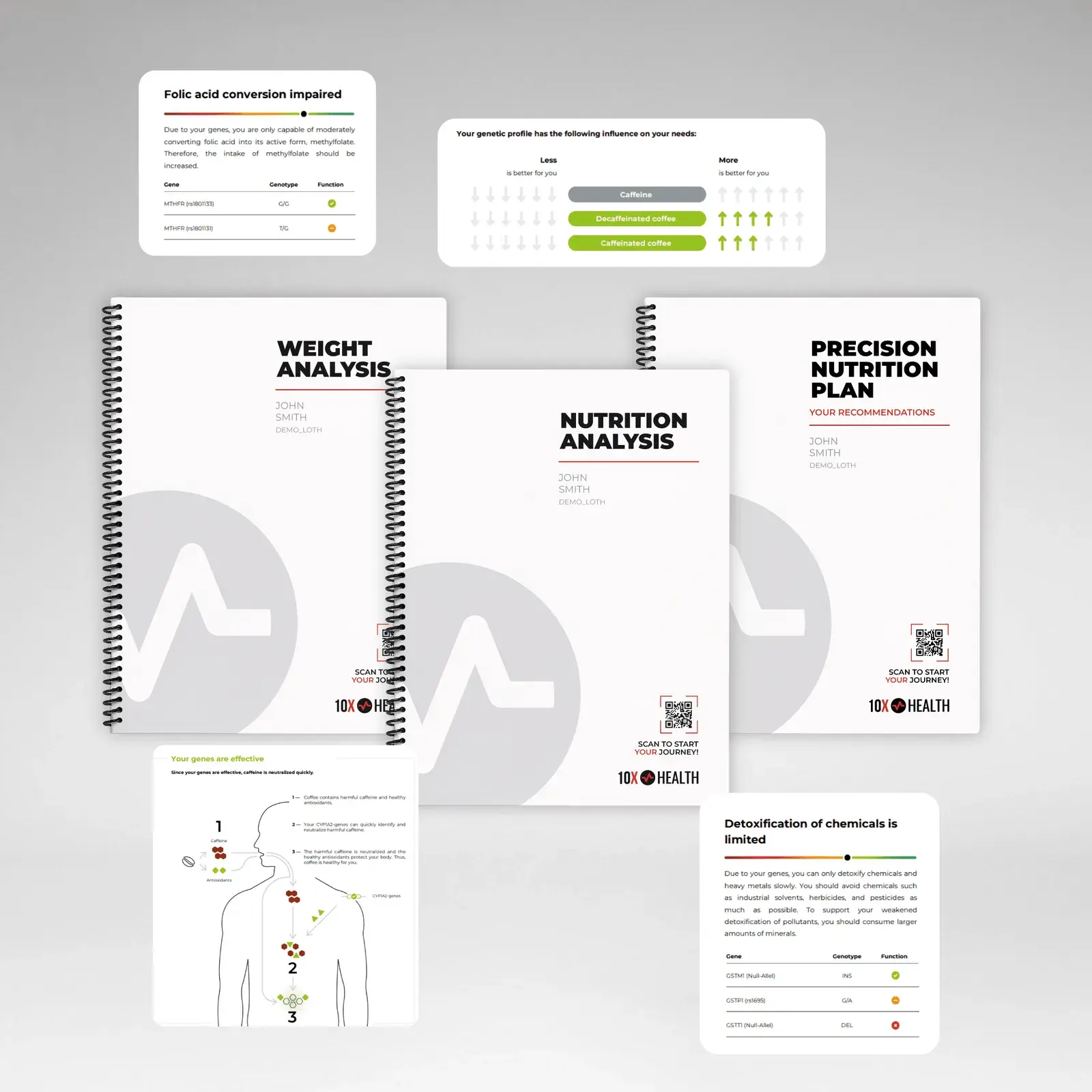 Personalized approachThe 10X Health System Shop now (opens 10X Health in a new tab; affiliate link)
- Save 10%
 Daily foundations10X Health Foundations Shop now (opens 10X Health in a new tab; affiliate link)
Affiliate disclosure: Live10X is an independent educational site. If you purchase through our 10X Health links, we may earn a commission at no extra cost to you. It never changes what we write. Read our affiliate disclosure.
See everything we coverThese statements have not been evaluated by the Food and Drug Administration. These products are not intended to diagnose, treat, cure, or prevent any disease.
Stop guessing. Start with data — and a plan.
Take the free wellness assessment to find your highest-leverage focus areas, then explore genetic testing when you're ready to personalize further.
“Shop 10X Health” is an affiliate link — we may earn a commission at no extra cost to you. Affiliate disclosure