Longevity · Answer
How much protein do you need for healthy aging?
Quick answer
How much protein do you need for healthy aging?
The PROT-AGE expert group recommends that healthy adults over 65 get 1.0–1.2 grams of protein per kilogram of body weight per day — above the standard 0.8 g/kg RDA — and at least 1.2 g/kg for active older adults. Spreading protein across meals and pairing it with strength training helps preserve muscle.
At a glance
Key takeaways
- The standard RDA is 0.8 g of protein per kg of body weight, but older adults likely need more.
- PROT-AGE recommends 1.0–1.2 g/kg/day for healthy adults over 65, and 1.2 g/kg or more with regular exercise.
- Aim for roughly 25–30 g of protein per meal rather than loading it into dinner.
- Protein works best alongside resistance training for preserving muscle.
Muscle is one of your most valuable longevity assets. It supports strength, balance, metabolism and independence — and it naturally declines with age, a process called sarcopenia. Protein intake is one of the two big levers for slowing that decline. The other is strength training — see our longevity guide for how both fit into a healthy-aging plan.
What's the recommended protein intake for older adults?
The Recommended Dietary Allowance for adults is 0.8 g of protein per kilogram of body weight per day. That figure is designed to prevent deficiency, not to optimize muscle in aging bodies. In 2013, the PROT-AGE Study Group reviewed the evidence and recommended:
- 1.0–1.2 g/kg/day for healthy adults over 65
- ≥1.2 g/kg/day for older adults who exercise regularly
- 1.2–1.5 g/kg/day for older adults with acute or chronic illness (with clinician guidance; kidney disease is an exception)
Why distribution across meals matters
Muscle-building responds to protein "doses." Many people eat little protein at breakfast and a lot at dinner. Aiming for roughly 25–30 g of protein per meal helps each meal count.
Protein plus strength training
A large meta-analysis of resistance-training studies found that protein supplementation added modest gains in muscle size and strength, with benefits leveling off around 1.6 g/kg/day in younger adults. The takeaway: protein amplifies training — it doesn't replace it. Adequate protein also supports recovery after workouts.
Easy ways to hit your target
- Greek yogurt or eggs at breakfast
- A palm-sized portion of fish, poultry, tofu or lean meat at lunch and dinner
- Beans, lentils, milk or a protein shake as snacks
Explore more in our healthy aging guide.
People also ask
More questions people ask
How much protein is that per day?
Is too much protein harmful?
Do I need protein supplements?
Answers
More answers
Citations
Sources & references
- [1]Evidence-based recommendations for optimal dietary protein intake in older people: a position paper from the PROT-AGE Study GroupBauer J, Biolo G, Cederholm T, et al.. Journal of the American Medical Directors Association, 2013 · Consensus statementView source : Evidence-based recommendations for optimal dietary protein intake in older people: a position paper from the PROT-AGE Study Group (opens in a new tab)
- [2]A systematic review, meta-analysis and meta-regression of the effect of protein supplementation on resistance training-induced gains in muscle mass and strength in healthy adultsMorton RW, Murphy KT, McKellar SR, et al.. British Journal of Sports Medicine, 2018 · Meta-analysisView source : A systematic review, meta-analysis and meta-regression of the effect of protein supplementation on resistance training-induced gains in muscle mass and strength in healthy adults (opens in a new tab)
- [3]Dietary Guidelines for AmericansU.S. Department of Agriculture and U.S. Department of Health and Human Services · Government resourceView source : Dietary Guidelines for Americans (opens in a new tab)
Study links open a PubMed search for the exact title, so they keep working even if a journal changes its URL.
Related guides
Go deeper
Our partner store
Shop 10X Health
Genetic testing, the 10X Health System and daily supplements — straight from the official 10X Health store. Save 10% through our links.
- Save 10%
 New · Weight & metabolism10X Health Metabolism Genetic Test Shop now (opens 10X Health in a new tab; affiliate link)
- Save 10%
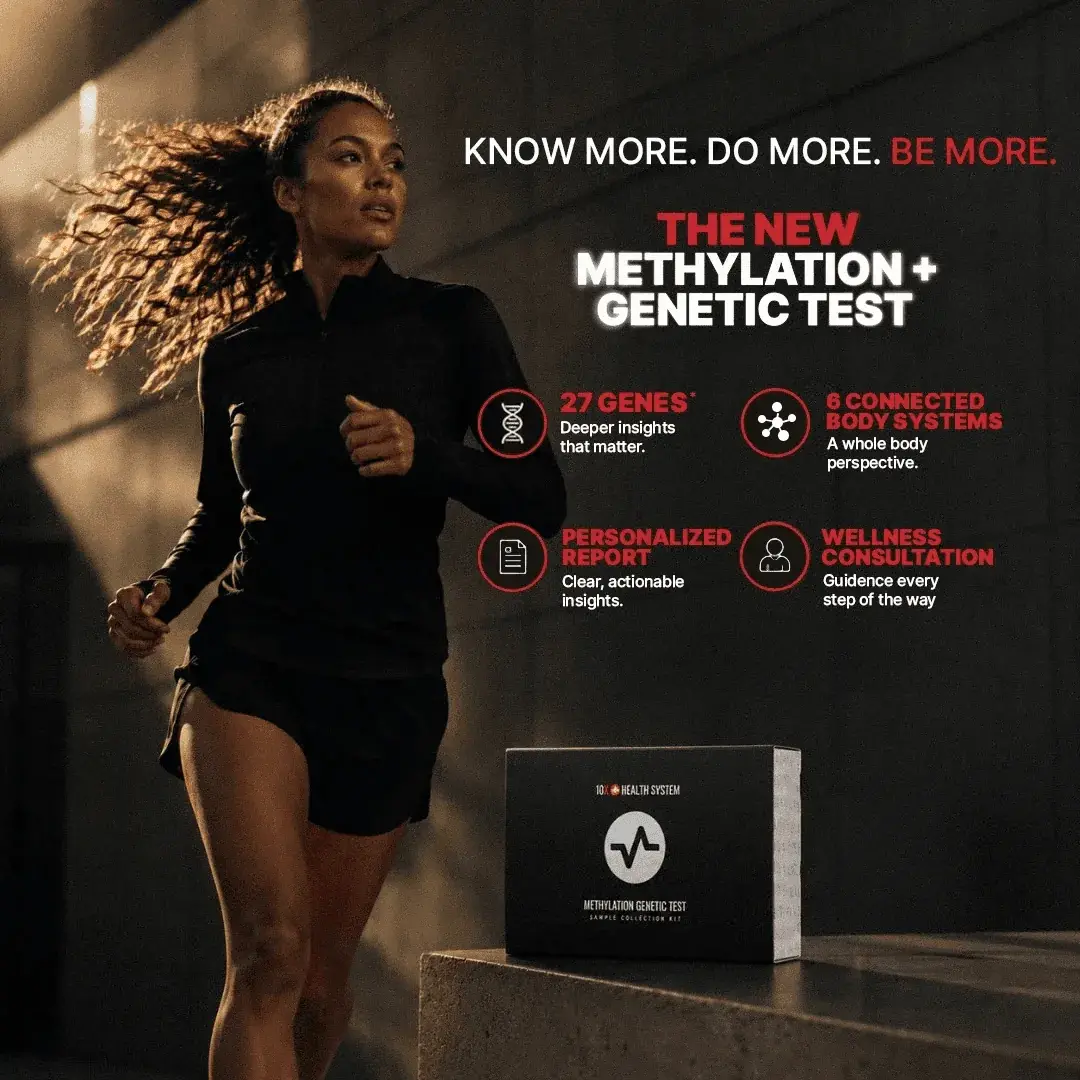 Wellness genetics10X Health Methylation + Genetic Test Shop now (opens 10X Health in a new tab; affiliate link)
- Save 10%
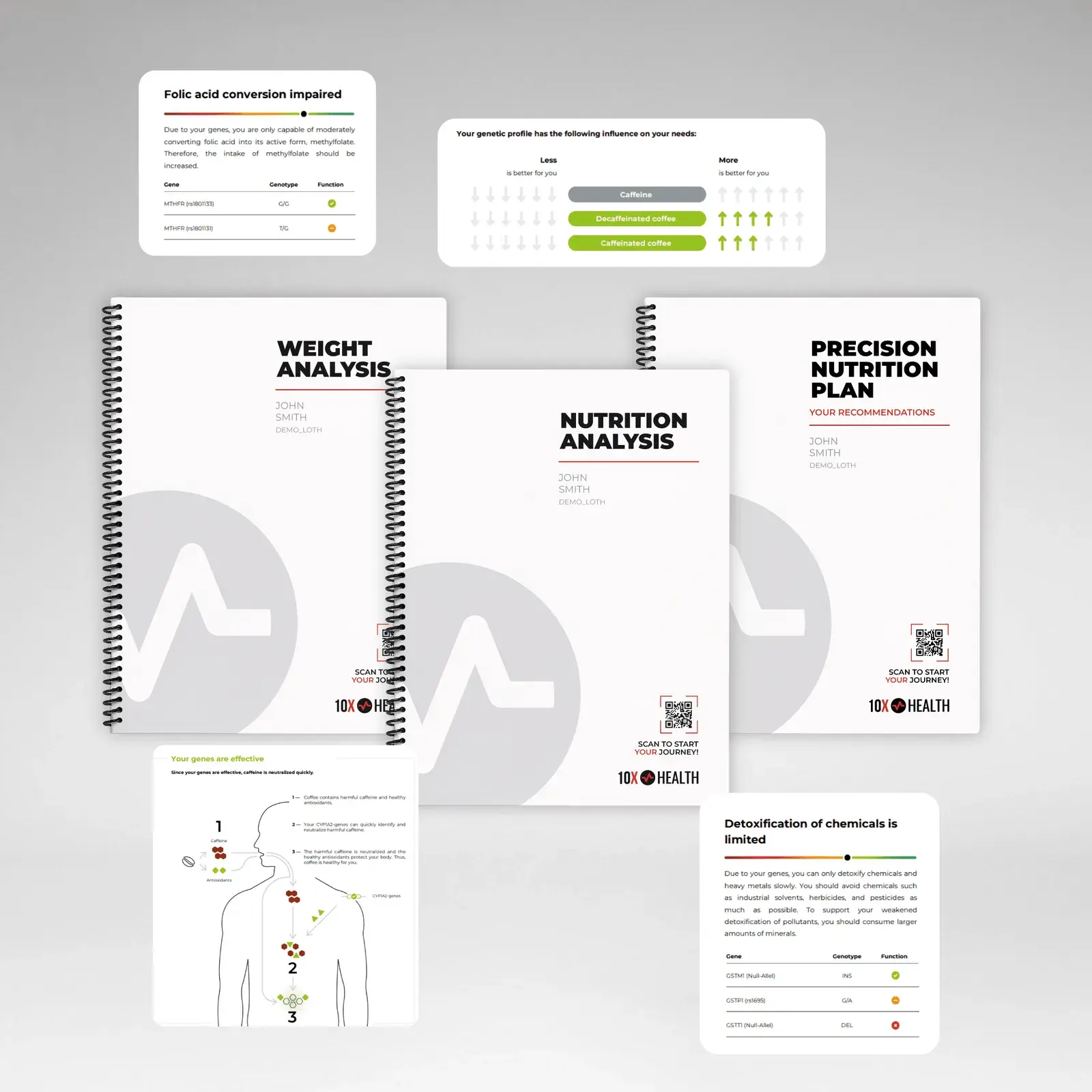 Personalized approachThe 10X Health System Shop now (opens 10X Health in a new tab; affiliate link)
- Save 10%
 Daily foundations10X Health Foundations Shop now (opens 10X Health in a new tab; affiliate link)
Affiliate disclosure: Live10X is an independent educational site. If you purchase through our 10X Health links, we may earn a commission at no extra cost to you. It never changes what we write. Read our affiliate disclosure.
See everything we coverThese statements have not been evaluated by the Food and Drug Administration. These products are not intended to diagnose, treat, cure, or prevent any disease.
Stop guessing. Start with data — and a plan.
Take the free wellness assessment to find your highest-leverage focus areas, then explore genetic testing when you're ready to personalize further.
“Shop 10X Health” is an affiliate link — we may earn a commission at no extra cost to you. Affiliate disclosure