Longevity · Answer
Is creatine safe for older adults?
Quick answer
Is creatine safe for older adults?
For healthy older adults, creatine monohydrate appears safe at typical doses of about 3–5 grams a day, according to a position statement reviewing hundreds of studies. Combined with resistance training, it can help increase strength and lean mass. People with kidney disease or who take certain medications should talk with a clinician first.
At a glance
Key takeaways
- Creatine monohydrate is one of the most researched supplements available.
- Typical doses are about 3–5 g per day; a loading phase is optional.
- It works best alongside resistance training, not instead of it.
- People with kidney disease should get medical advice before using it.
Creatine has moved from bodybuilding shelves into mainstream healthy aging conversations — and for good reason. It's one of the best-researched supplements available.
What the research says about safety
The International Society of Sports Nutrition reviewed the evidence in a 2017 position statement and concluded that short- and long-term creatine monohydrate supplementation — up to 30 grams a day for five years in some studies — is safe and well tolerated in healthy people, including older adults. Typical doses are far lower.
The main caveat: creatine can raise blood creatinine, a marker used to estimate kidney function. That's usually not a sign of harm, but tell your clinician you take it. People with existing kidney disease should get medical advice first.
Benefits for older adults
Creatine helps muscles regenerate energy during short, intense efforts. Combined with resistance training, studies in older adults show greater gains in strength and lean mass than training alone. That matters because muscle loss affects mobility and independence.
Protein is still the foundation. A large meta-analysis found protein supplementation boosted strength-training gains, with benefits plateauing around 1.6 g/kg/day — see how much protein for healthy aging.
How to take it
- Form: creatine monohydrate — the most studied and least expensive.
- Dose: 3–5 g daily. A loading phase (20 g/day for 5–7 days) is optional.
- Timing: any time of day; consistency matters more.
- Pair with training: follow a plan like strength training after 40.
Choose products with third-party testing, and check with your clinician if you take medications.
People also ask
More questions people ask
Does creatine damage the kidneys?
Does creatine help the brain?
Does creatine cause water retention?
Answers
More answers
Citations
Sources & references
- [1]International Society of Sports Nutrition position stand: safety and efficacy of creatine supplementation in exercise, sport, and medicineKreider RB, Kalman DS, Antonio J, et al.. Journal of the International Society of Sports Nutrition, 2017 · Consensus statementView source : International Society of Sports Nutrition position stand: safety and efficacy of creatine supplementation in exercise, sport, and medicine (opens in a new tab)
- [2]A systematic review, meta-analysis and meta-regression of the effect of protein supplementation on resistance training-induced gains in muscle mass and strength in healthy adultsMorton RW, Murphy KT, McKellar SR, et al.. British Journal of Sports Medicine, 2018 · Meta-analysisView source : A systematic review, meta-analysis and meta-regression of the effect of protein supplementation on resistance training-induced gains in muscle mass and strength in healthy adults (opens in a new tab)
Study links open a PubMed search for the exact title, so they keep working even if a journal changes its URL.
Related guides
Go deeper
Our partner store
Shop 10X Health
Genetic testing, the 10X Health System and daily supplements — straight from the official 10X Health store. Save 10% through our links.
- Save 10%
 New · Weight & metabolism10X Health Metabolism Genetic Test Shop now (opens 10X Health in a new tab; affiliate link)
- Save 10%
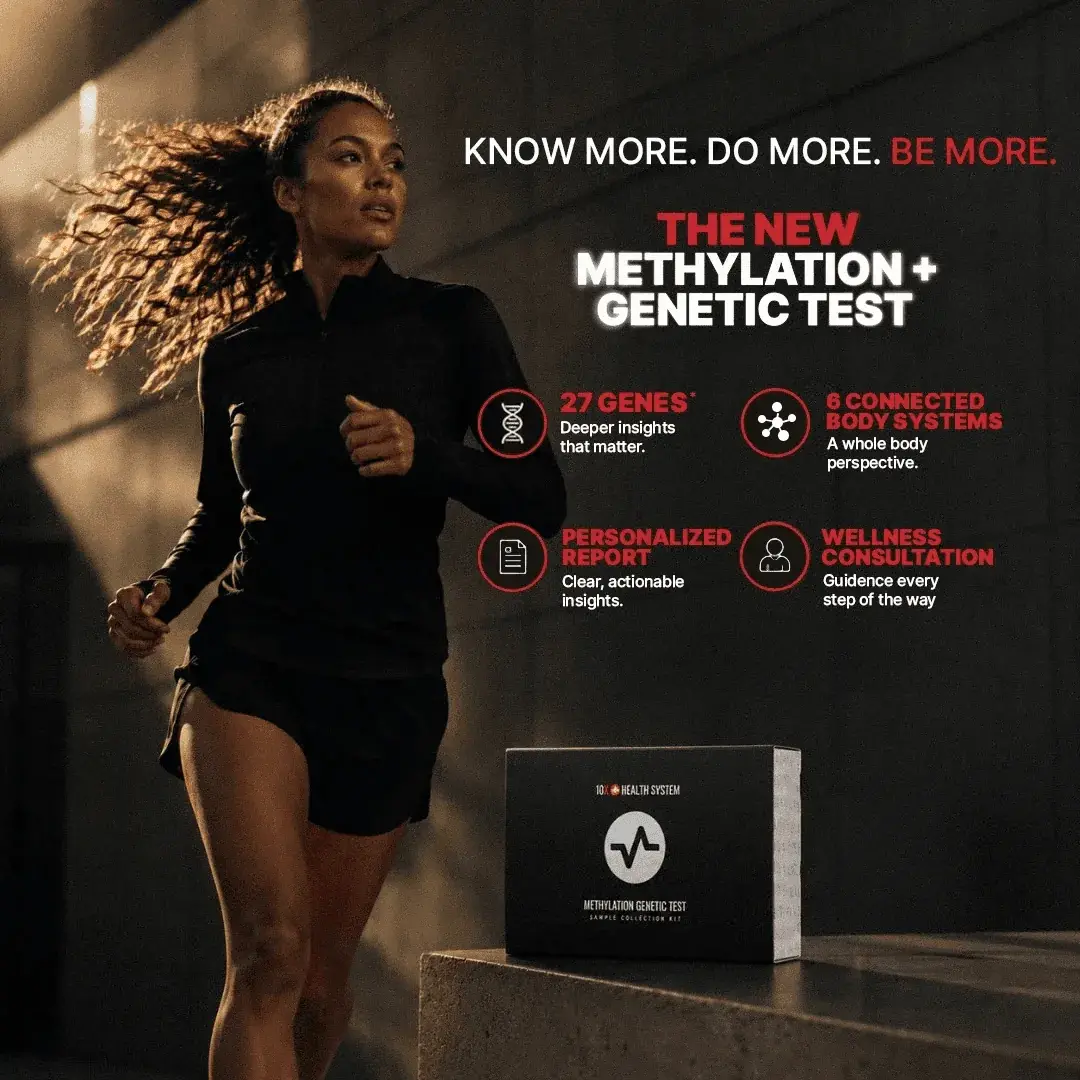 Wellness genetics10X Health Methylation + Genetic Test Shop now (opens 10X Health in a new tab; affiliate link)
- Save 10%
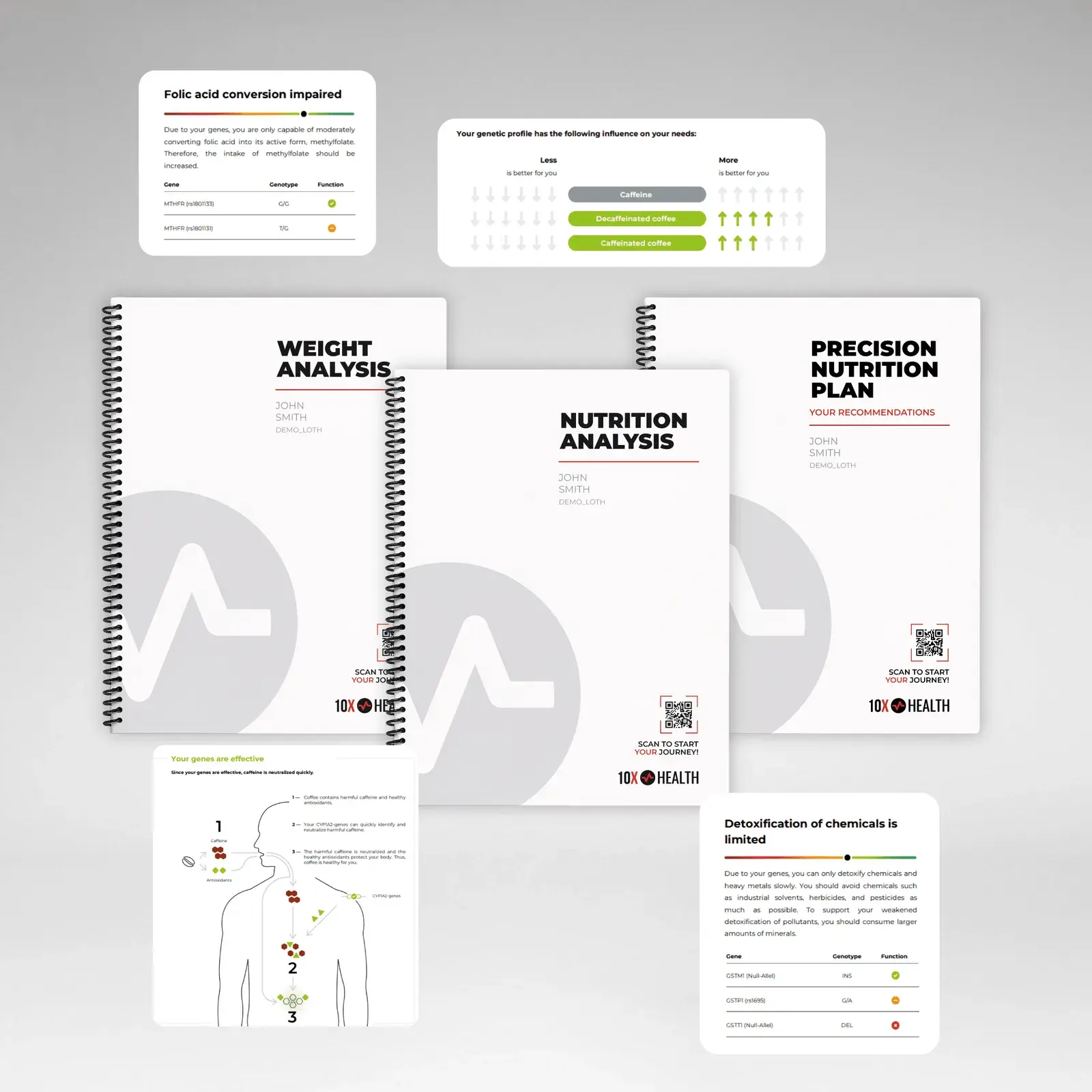 Personalized approachThe 10X Health System Shop now (opens 10X Health in a new tab; affiliate link)
- Save 10%
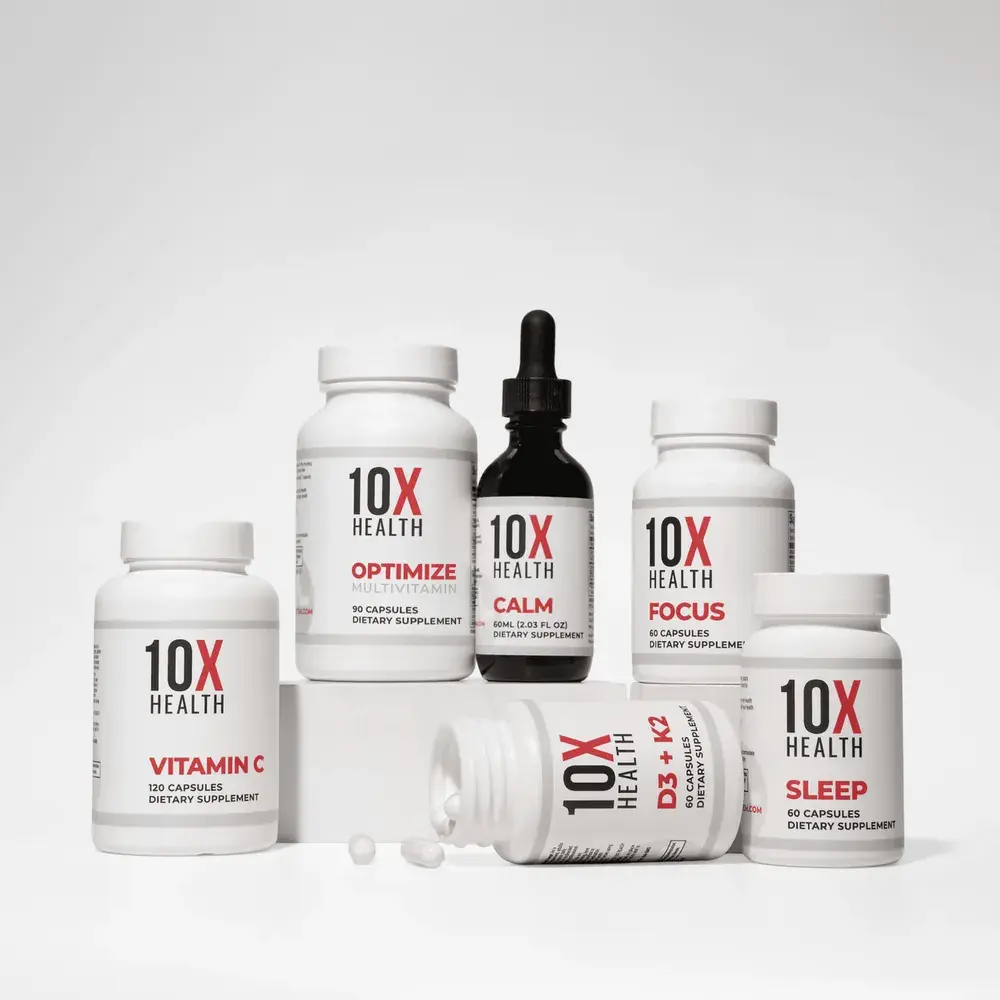 Daily foundations10X Health Foundations Shop now (opens 10X Health in a new tab; affiliate link)
Affiliate disclosure: Live10X is an independent educational site. If you purchase through our 10X Health links, we may earn a commission at no extra cost to you. It never changes what we write. Read our affiliate disclosure.
See everything we coverThese statements have not been evaluated by the Food and Drug Administration. These products are not intended to diagnose, treat, cure, or prevent any disease.
Stop guessing. Start with data — and a plan.
Take the free wellness assessment to find your highest-leverage focus areas, then explore genetic testing when you're ready to personalize further.
“Shop 10X Health” is an affiliate link — we may earn a commission at no extra cost to you. Affiliate disclosure