Longevity · Answer
How often should you do strength training after 40?
Quick answer
How often should you do strength training after 40?
After 40, aim for strength training at least two days a week, working all major muscle groups. A large meta-analysis found that 30–60 minutes of muscle-strengthening activity per week was associated with the lowest risk of death from all causes. Two or three full-body sessions, progressed gradually, fits that range for most people.
At a glance
Key takeaways
- Adults should do muscle-strengthening activity at least two days per week.
- About 30–60 minutes per week was associated with the lowest all-cause mortality.
- Muscle and strength decline with age, but resistance training slows that loss at any age.
- Progressive overload — gradually adding weight or reps — is what drives results.
Muscle is a longevity organ. From midlife onward, people gradually lose muscle mass and strength, which affects balance, metabolism and independence. The good news: resistance training slows that decline at any age.
The evidence-based target
The Physical Activity Guidelines for Americans recommend muscle-strengthening activities that involve all major muscle groups on two or more days a week.
A 2022 meta-analysis of prospective studies found that 30–60 minutes per week of muscle-strengthening activity was associated with the lowest risk of all-cause mortality, cardiovascular disease and cancer. Benefits appeared to plateau — and possibly reverse slightly — at very high volumes, though that data is limited. Combining strength with aerobic exercise had the strongest association of all.
A simple weekly plan
- 2–3 full-body sessions of 20–45 minutes.
- 5–6 movements: a squat or leg press, a hinge (deadlift or hip bridge), a push, a pull, a carry and core work.
- 2–3 sets of 6–15 reps, finishing each set with a couple of reps in reserve.
- Progress slowly: add a little weight or a rep when sets feel easy.
Make it count
Recovery matters more after 40. Leave a day between hard sessions for the same muscles and prioritize sleep — see our recovery guide. Pair training with enough protein: how much protein for healthy aging.
If you have joint problems or heart conditions, get guidance from a clinician or qualified trainer. For more on staying strong through midlife and beyond, visit our healthy aging hub.
Start with lighter loads for the first few weeks so joints and connective tissue can adapt, then build steadily.
People also ask
More questions people ask
Is it too late to start lifting at 50 or 60?
Do I need heavy weights?
Should I do cardio and strength on the same day?
Answers
More answers
Citations
Sources & references
- [1]Muscle-strengthening activities are associated with lower risk and mortality in major non-communicable diseases: a systematic review and meta-analysis of cohort studiesMomma H, Kawakami R, Honda T, Sawada SS. British Journal of Sports Medicine, 2022 · Meta-analysisView source : Muscle-strengthening activities are associated with lower risk and mortality in major non-communicable diseases: a systematic review and meta-analysis of cohort studies (opens in a new tab)
- [2]The Physical Activity Guidelines for AmericansPiercy KL, Troiano RP, Ballard RM, et al.. JAMA, 2018 · Practice guidelineView source : The Physical Activity Guidelines for Americans (opens in a new tab)
Study links open a PubMed search for the exact title, so they keep working even if a journal changes its URL.
Related guides
Go deeper
Our partner store
Shop 10X Health
Genetic testing, the 10X Health System and daily supplements — straight from the official 10X Health store. Save 10% through our links.
- Save 10%
 New · Weight & metabolism10X Health Metabolism Genetic Test Shop now (opens 10X Health in a new tab; affiliate link)
- Save 10%
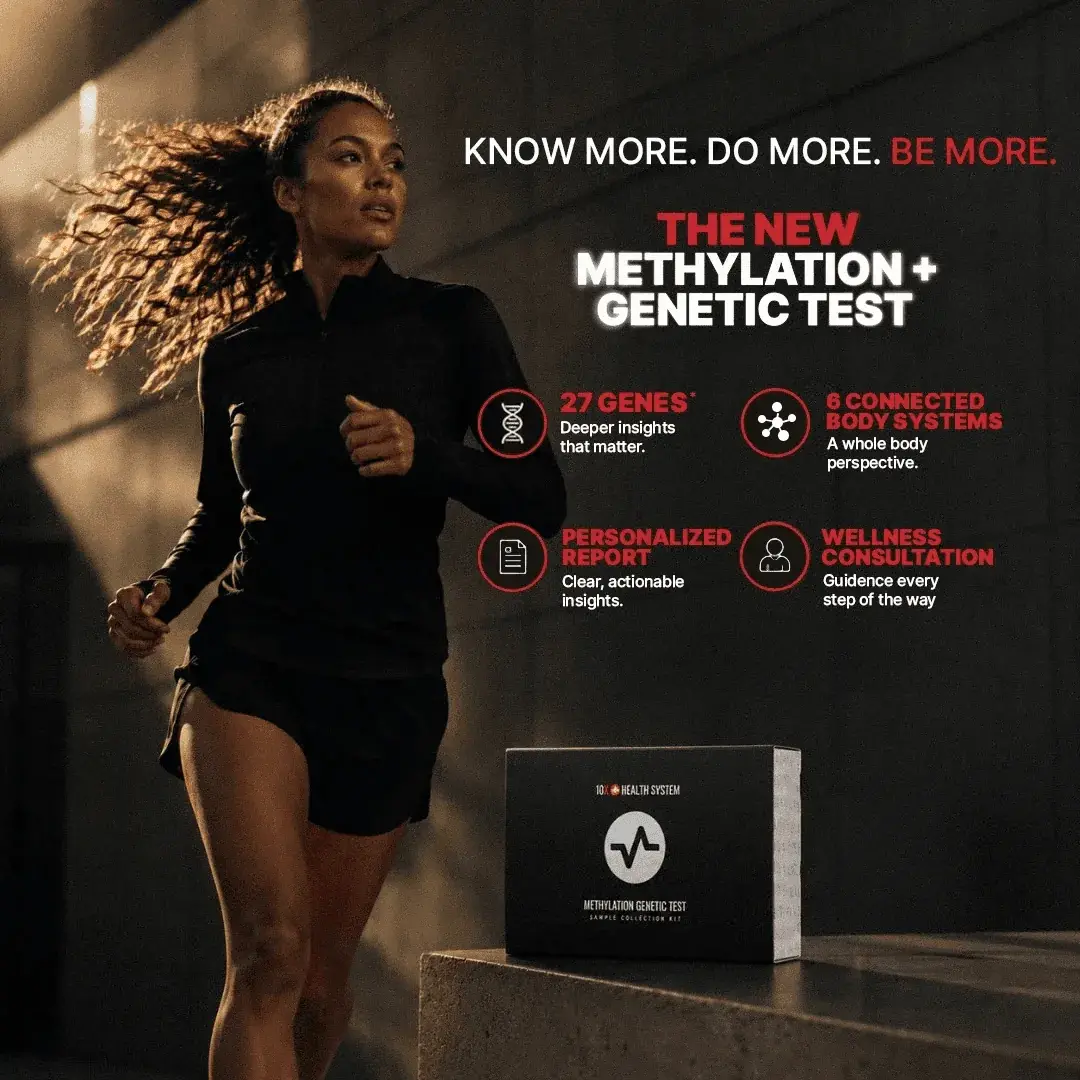 Wellness genetics10X Health Methylation + Genetic Test Shop now (opens 10X Health in a new tab; affiliate link)
- Save 10%
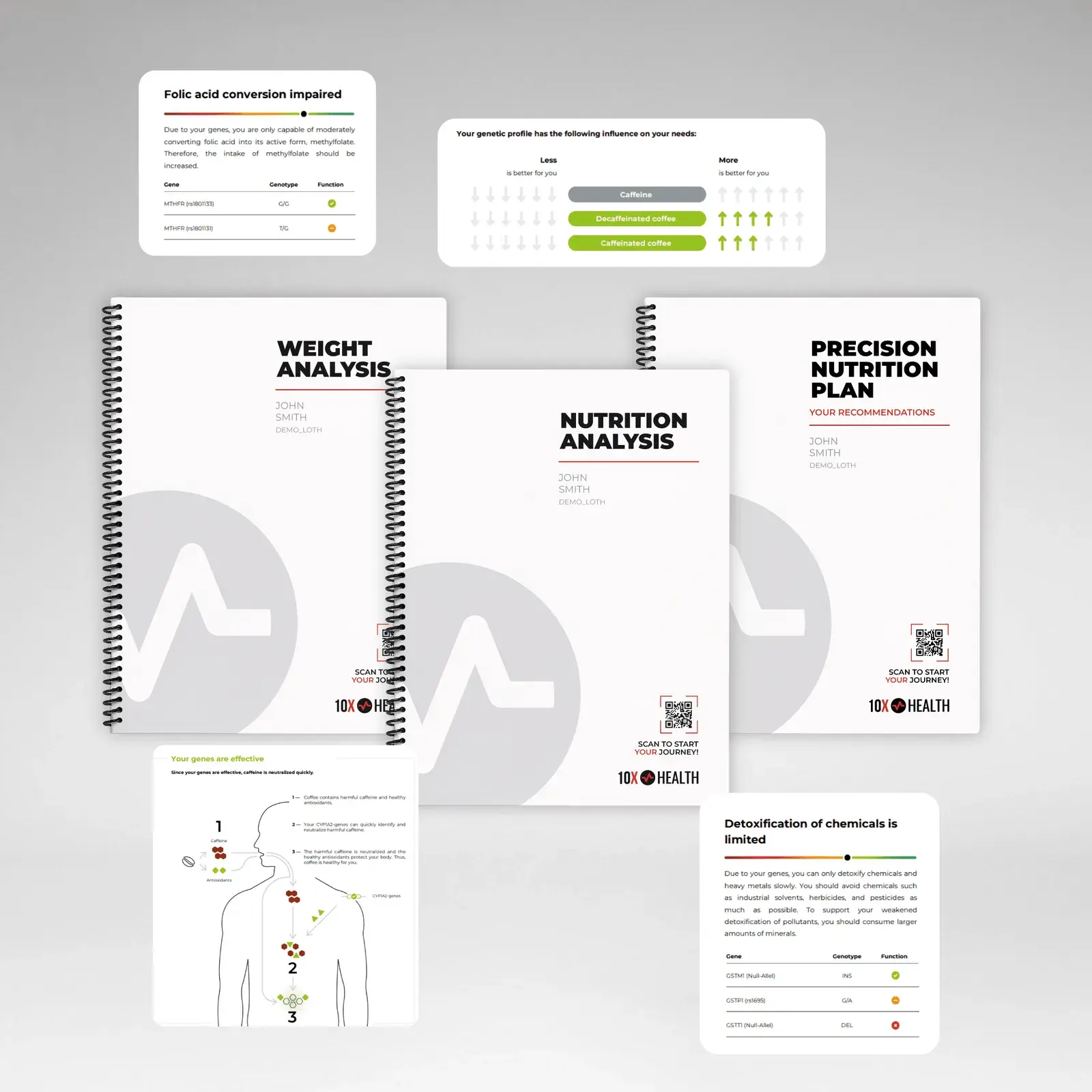 Personalized approachThe 10X Health System Shop now (opens 10X Health in a new tab; affiliate link)
- Save 10%
 Daily foundations10X Health Foundations Shop now (opens 10X Health in a new tab; affiliate link)
Affiliate disclosure: Live10X is an independent educational site. If you purchase through our 10X Health links, we may earn a commission at no extra cost to you. It never changes what we write. Read our affiliate disclosure.
See everything we coverThese statements have not been evaluated by the Food and Drug Administration. These products are not intended to diagnose, treat, cure, or prevent any disease.
Stop guessing. Start with data — and a plan.
Take the free wellness assessment to find your highest-leverage focus areas, then explore genetic testing when you're ready to personalize further.
“Shop 10X Health” is an affiliate link — we may earn a commission at no extra cost to you. Affiliate disclosure